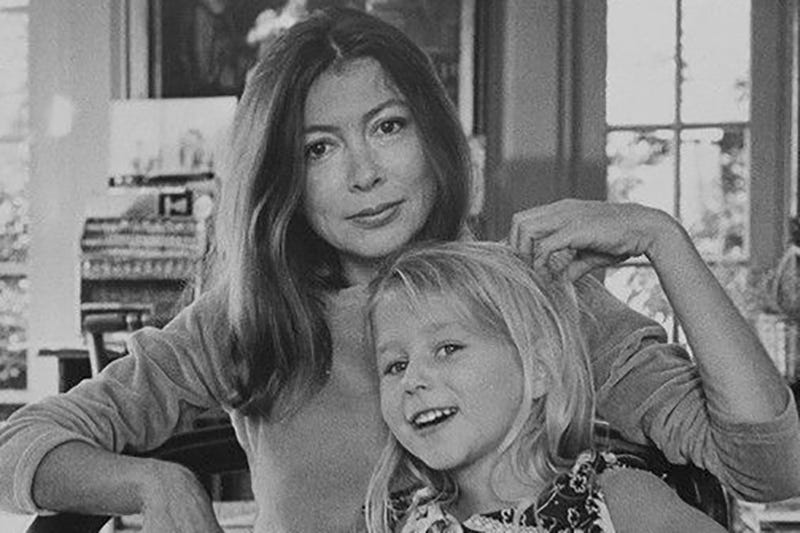
“I write entirely to find out what I’m thinking, what I’m looking at, what I see and what it means.” — Joan Didion
Welcome to the third day of Essay Camp.
How are you faring so far? Have you had a chance to take a walk around the virtual pond and hear the frogs singing in the reeds? Have you managed to write for two days in a row? If you have—or even if you haven’t—let’s write again today.
What does it mean to tell the truth in writing? It’s less about disclosure and more about reaching a little farther, going a little deeper, and allowing yourself to be present and specific in what you write about and describe.
We are all unreliable narrators, especially about ourselves. As Sheila Heti said: “the self’s report on itself is surely a great fiction.” Even so, we writers must set our sights on a kind of truth, even when writing fiction, in order to avoid our own bad habits of laziness and cliché. We must ask ourselves, what did I actually see and feel? What is the world as we experience it really like? And what do the blinders of cliché obscure? Rendered in the metaphor of the visual arts: paint what you see, don’t paint what you don’t see.
Good first person writing requires vulnerability. Cliché is a shield that stands between us and the way things really are, protective but boring. No writing can be like an ax for the frozen sea inside us if it is also safe and boring. Cliché is safe for the writer.
By now, some of you may be writing drafts of essay-shaped things already, while others will still be keeping it loose or even scattershot. That is all fine. If you’re wondering when we will get to the part of Essay Camp where we actually write an essay, don’t worry. We’re going to start talking a little bit about essay structure tomorrow.
For today, let’s stay in that free, generative writing phase a little bit longer. Let’s spend more time in that strange wild place where words come from when we’re not yet trying to “be good at it” or “do it right.” Find out what words or topics are there on the edge of your conscious understanding.
Don’t worry about coming up with good ideas. Do not try to be talented. Just be present and write honestly about whatever comes. Conjure images with your writing. Paint a picture. Tell it like it really is, or like it really was. Write to find out what it is you want to write about.
Let’s begin.
“Time passes. Memory fades, memory adjusts, memory conforms to what we think we remember.” — Joan Didion
Writing Assignment, Day 3
If you have already written two five things drafts, write another one today. Open up a blank document, turn to a blank page, write or type the number 1. Then start writing. Write about whatever comes, and keep going until you’re done. You can write about anything: the light in the room, the dream you had last night, something you did yesterday or something you remember from when you were five. First thought, best thought. A few sentences, a few paragraphs, a whole page—once again, it’s up to you. Do not read back over what you have written. Do not rewrite or edit your work at this stage. Just move on to the next number, and then do it again until you’ve completed all five things.
Alternate Option 1: Freewriting
If you still have not tried the five things prompt, I do encourage you to give it a try. If you’re not working with that prompt today, proceed to freewriting instead. Set a timer for whatever amount of time you have, and write whatever comes. Try not to look back at what you’ve written. Keep moving forward without worrying whether what you’ve written is good or not, or even if it makes sense. Keep going until you’ve reached the end of your allotted time.
If you find that freewriting turns into venting or negative rumination like I did, try to focus on concrete observations. Write about some simple quotidian things that happened, or about ten things you saw. Keep it rooted in the immediate, physical world. Do not worry about beginnings or about the structure of your sentences. For now just focus on getting words down on the page.
In case you need a prompt:
Write a taxonomy of the pets you had in childhood, or, if you didn’t have any pets, write about the pets you wanted but didn’t get.
See if a memory arises from one of the following words, and then write about it: caterpillar, hyacinth, peppermint, masks, bitter, teddy bear, tent, shock.
Write about a favorite piece of clothing that you don’t own anymore.
Write about the object or item you have owned the longest.
Write a memory that you wish you had—fantasy or otherwise.
Write a sentence that begins “Once there was a tree…”1
Write about something very small.
Alternate Option 2: Rebel Mode
Do your thing. Work on your own project, in whatever way you see fit, for as long as you can.
Reading Assignment, Day 3
I hope you’ve been able to carve out some time to do a little reading as well as writing so far. Today, please choose one of the essays below, or select one you missed from the previous days that strikes your interest.
“Things That Appear Ugly Or Troubling But Upon Closer Inspection Are Beautiful,” by Gretchen Legler, 468 words, 2 minute read
“Love Songs: I’m Your Man,” by Laurie Stone, 740 words, 3 minute read
“The Negreeting,” by Ross Gay, 722 words, 3 minute read
(The above link also includes the short essays “The High-Five from Strangers,” “Umbrella in the Café,” “Microgentrification: WE BUY GOLD,” “The Sanctity of Trains,” “Kombucha in a Mid-century Glass,” and “Cuplicking” from Gay’s essay collection The Book of Delights.)
“Rape Joke,” by Patricia Lockwood, 1,266 words, 5 minute read
“An Almanac of Birds,” by Maria Popova, 2,141 words, 8 minute read
“Fuck the Bread. The Bread Is Over,” by Sabrina Orah Mark, 1,627 words, 8 minute read
“Periwinkle, the Color of Poison, Modernism, and Dusk,” by Katy Kelleher, 2,053 words, 8 minute read
“Quitting,” by John Phipps, 2,226 words, 9 minute read
“Shooting An Elephant,” by George Orwell, 3,283 words, 13 minute read
“What the Black Woman Thinks About Women’s Lib,” by Toni Morrison, 3,878 words, 15 minute read
“One Four Two Five Old Sunset Trail,” by Joy Williams, 3,936 words, 16 minute read
“Welcome To Dog World,” by Blair Braverman, 7,485 words, 30 minute read
Time To Write!
Happy writing!
xo S
Essay Camp is free, but paid subscribers make it possible. If you’d like to subscribe at the annual rate of $30, please do so. Thank you so much to everyone who already subscribes!