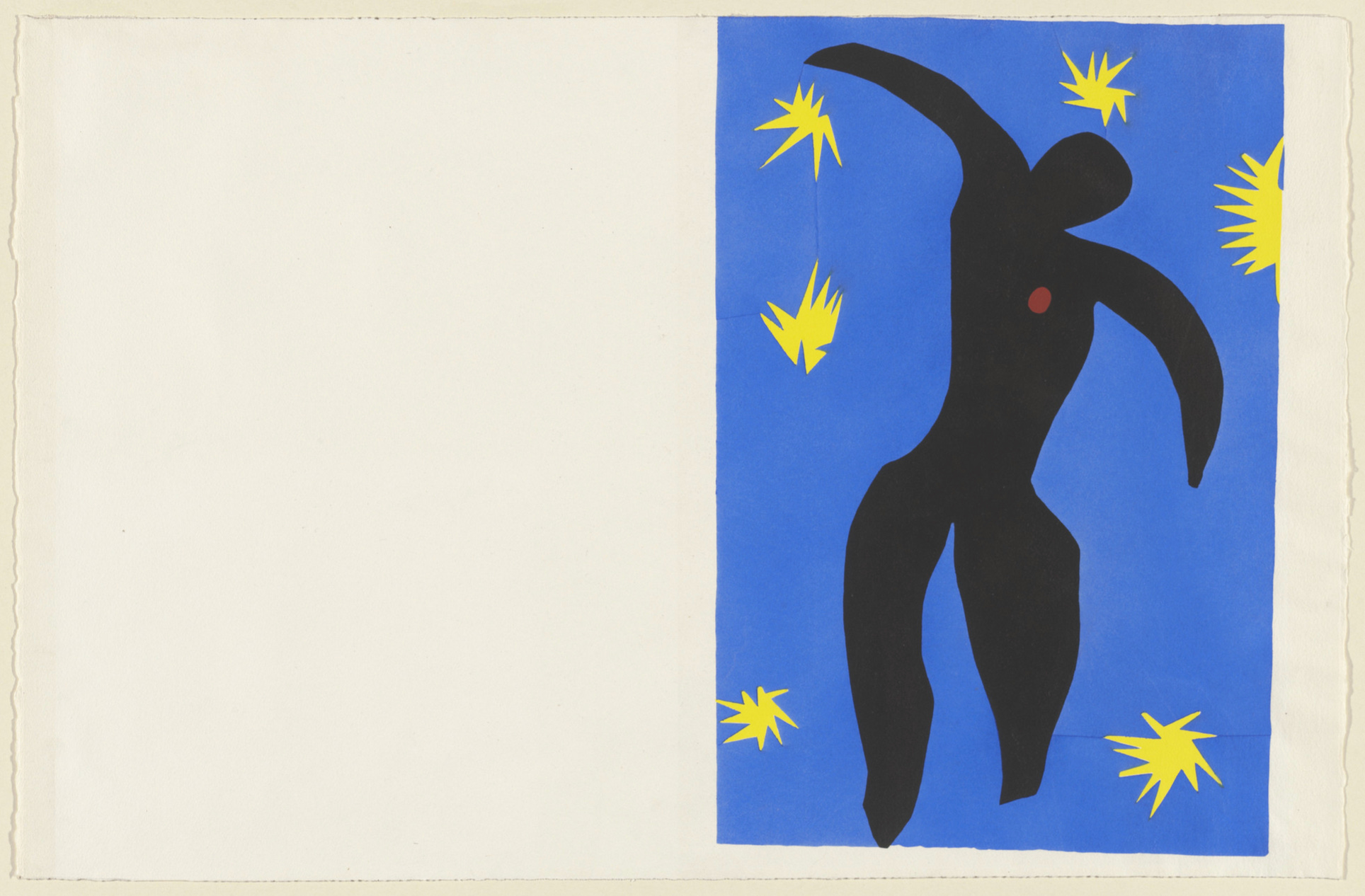
Going Through Old Notebooks Part 15: Daedalus
In the ICU, everything beeps.
Dear reader, this comes from two notebook entries written in New Mexico in the fall of 2021.
The helicopter outside the hospital takes off from a helipad right in front of the main doors of the emergency room. It is strange to see, whirring and whirring, until the right speed is reached for ascent to be possible. Leaving, I assume that no one sick or injured is inside. People watch from the parking lot walkway; one takes a video. This particular helicopter is yellow, but there are others—red, black, white, blue. They seem too small to fit all the things that one needs to keep a critically ill patient alive. I suppose these are only for short rides; for the hikers rescued from mountainsides or other such predicaments. I don’t know.
The air has turned crisp. Last night, as I stood at the end of the driveway of a borrowed house, in a suburban American street, I watched the green leaves move in the air under a street light in the quiet. The sky, in early evening, was dark but not starry. The moon was a sliver, unremarkable. A star, or a planet, had positioned itself at an angle below the moon, like an arrow shot from a bow, or rather the point of a long arrow pulled back and ready to be shot. I noticed the quiet houses, and the inadequate street lights, the patches of dark, and the strange hush of air and trees as I waited for my brother to pick me up and take me back to the hospital.
In the ICU, everything beeps. There are the beeps that accompany the yellow or red lights on the heart monitor when the rhythm falters, and the chime of the oxygen meter, and the clown-car honks of the ventilator when my father breathes wrong against the machine, or doesn’t breathe, or tries to talk.
Today, or maybe it was yesterday, my father asked why it was that he couldn’t talk. He asks this by mouthing the words, which is sometimes easy to understand, and sometimes hard, and sometimes impossible. I tell him that he can’t talk because there isn’t any air passing over his vocal chords. I say that before too long he’ll be fitted with a new kind of cap for his tracheotomy, which will allow for the air to pass and then he’ll be able to speak normally, with his own voice. He seems skeptical.
As humans, our greatest strength is our ability to adapt. Strange surroundings become quickly familiar. The intolerable becomes routine. The borrowed house, the ICU, the light in the kitchen over someone else’s linoleum, the corridors of the hospital and the smell of the room, the cleaning products and the bags of medicines and of bodily secretions; this world in which all other identities have been stripped from me, save that of daughter and sister; the patients in the other rooms, visited and tended to as if upon an altar, immobile and fussed-over as gods, and just as silent.
When they call a code blue for somebody else, I simply get up and close the door. I don’t want my father to see or hear the commotion, the shouts, the family members’ screams. I turn the music up: Bach, and Yo Yo Ma, and the cello suites. The light in the room is warmer than it has any business being. We are safe
in this light behind
the brown patterned curtain, the glow
of the monitors, the screens
of his heart rate, and breathing, and of my computer
picking tracks to play, albums
the African men’s choir that he loves
and the early 20th century French surrealist
and me, dancing to Paul Simon while wearing
PPE, the yellow plastic gown with the strange
ties, the pinstripes that make me look
like a legal pad.
I am stitching together
these wings out of wax and surgical gloves
I am melting down the ore of a life, engineering
a future in which he
is still with us
I am stitching together
stitching together
these wings with which we will both
I am sure of it
fly home.


Loved the “stitching together a life” metaphor. I can truly empathize with it.
heartbreaking and glorious. xx