

It’s a book review apocalypse out there, and an apocalypse for book reviews means an apocalypse for books. Last night, I watched Ron Charles (lately of The Washington Post when it was still a real newspaper) speaking live on Substack with NPR’s Weekend Edition host Scott Simon. Scott said he was heartened that so many books were still coming out, but Ron said this chilling thing in response. He said:
“But it so depresses me that the vast majority of those books will never get reviewed, never get read, and will just move—you know, the long struggle it took to get that book published—several years probably, many people involved—then the book is published into complete and utter silence and then passes away. That’s very sad.”
This is so crushingly true, and indeed, so excruciatingly, mind-bendingly tragic. The book passes away. It is, in a sense, stillborn. People toil away for years—sometimes decades (eh hem)—to finally finish their book. They crawl a hundred thousand miles over broken glass to finish it and edit it and get it published, and then…crickets. The infrastructure that has existed for hundreds of years that was built to catch books as they are born and help shepherd them into the hands of the right readers—that infrastructure is largely gone.
Since all of the usual channels for book discovery have been gutted by the uber-wealthy, which they have clearcut for their own personal profit, and the entire journalism industry has been more or less murdered by tech bros, we authors are all now expected to engage in this starved and hysterical culture of the few.
What do I mean by a starved and hysterical culture of the few? I mean that only a few people can “make it.” And by make it, I mean survive. I mean have the ability to continue. It’s a “winner takes all” universe, a massacre of the midlist, an extermination of the non-celebrity working author. A good and innovative book will come out and there will be no one left to cover it. No extended weekly books section in local newspapers that might pass the news along. No way for anyone to even know that the books exist. You either become a TikTok sensation and earn $20 million, or you sink into oblivion and perish.
I am exaggerating, but only slightly. All of this is bad. Not just for authors, obviously, but for readers too, and anyone who still wants themself and the people around them to retain the ability to think for themselves. It feels somewhat idiotic to have to stand up and say “hey listen, um, books are important, actually,” but maybe we are at that point. We could all benefit from reading more and longer, from getting away from the emotional meat grinder of social media and what passes for the news, the nerve-fraying thrall of doomscrolling and screens. We need to heal—our institutions, our communities, our attention spans, our minds, ourselves. To do this, I recommend books.
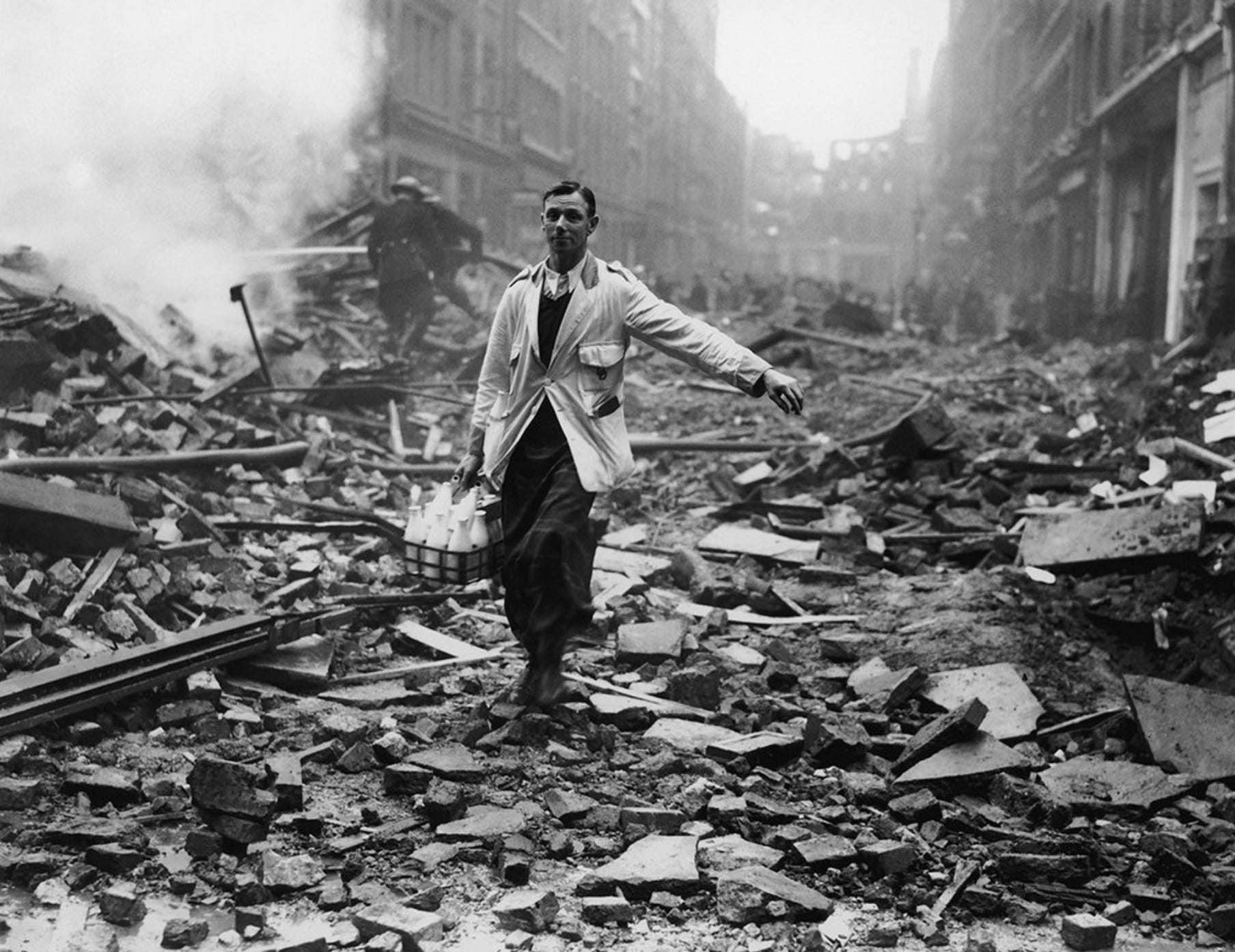
The image I used to illustrate this post is a photo taken in 1940 of a milkman delivering milk during the London blitz. I saw this picture the other day and identified strongly with it. I’m not quite sure if I’m the milkman or the bombed city in this metaphor, but probably both. I feel like both right now. The world around me is in ruins, and my own personal infrastructure and the infrastructure of my profession have been smashed, and yet still I want to get to work in whatever small way I can. Even wounded and inadequate, I want to continue. To contribute.
Lesson two in Timothy Snyder’s Twenty Lessons on Fighting Tyranny is to defend institutions, and of course the institution closest to me is books. It’s funny to think of “books” as an institution, but they are. They absolutely are. The scaffolding that allowed their survival was hidden within adjacent institutions, like that of “the press,” itself deeply imperiled from all sides, as well as brick and mortar bookstores both big and small. But as we witnessed in the past week, even when newspapers themselves manage to survive, their books coverage may not. It has often been among the first things to go.
I grew up in the Bay Area reading the San Francisco Chronicle, especially the “pink pages,” as we called the arts section, for they were indeed pink. It had the music listings, the movie reviews with their 1940s-era “little man” ratings system, and of course the books section. The book reviews were in service of the reader, not the writer of the review. It wasn’t a chance to prove anything or promote something else, just a review of a book, so that people who might like that book would know of its existence (or, in rare cases, know what to avoid).
I have long dreamed of adding a monthly books supplement to this newsletter. I tried to do it myself, in a small way, for a while, a few years back, but it was more of a monthly “heads up” than a series of reviews. My time on Substack has been nothing if not one long lesson in personal limitations. Besides, I don’t want a book supplement that is just my reviews anyway. I want a real supplement, with different reviewers, all paid, and an assigning editor—paid as well—so that things can be done properly and most of all reliably.
My dream is this: a monthly book review supplement, about six reviews per month, focusing on books that the readership of this newsletter might find interesting. It might lean towards fiction and literary nonfiction, memoir and poetry, with themes of art and science, nature and politics, family and migration, micro-histories and the process of creativity, etc. The reviews would be on the shorter side, and relatively light in tone. Serious, but with humor included when possible. There would be no bad reviews, unless a writer has previously published more than three commercially successful books, or is already a celebrity in another field. Otherwise, if you don’t like it, don’t review it. Pick something else. No hatchet jobs.
I know I can’t do this by myself, so I looked into what it would cost to pay other people to do it. After all, miraculously, this newsletter somehow has a free readership that is larger than some regional newspapers, and that’s not nothing. I believe it is what some people would call a platform, and that is of use, and has value, or could have, to people other than myself.
I did some basic math on this, and to pay an assignment editor and six reviewers a month the bare minimum rate, with no increased income to myself, I would still need an additional 750 paid annual subscribers to make this happen. On the one hand, facepalm—that’s a lot of new paid subscribers. But on the other, it’s still less than 5% of the newsletter’s total readership, so technically it could happen. We’ll just have to see.
If you’re a free reader who already enjoys this newsletter and would like to see a professional, monthly book review supplement, consider becoming a paid subscriber. Books are an institution that we could defend together, at least in this small way. It’s still a dream at this point, but we could make it happen.
UPDATE: The first issue of The Book Supplement launched on March 8th 2026. To keep this going, please consider becoming a paid subscriber ($30) or a Founding Member ($250).
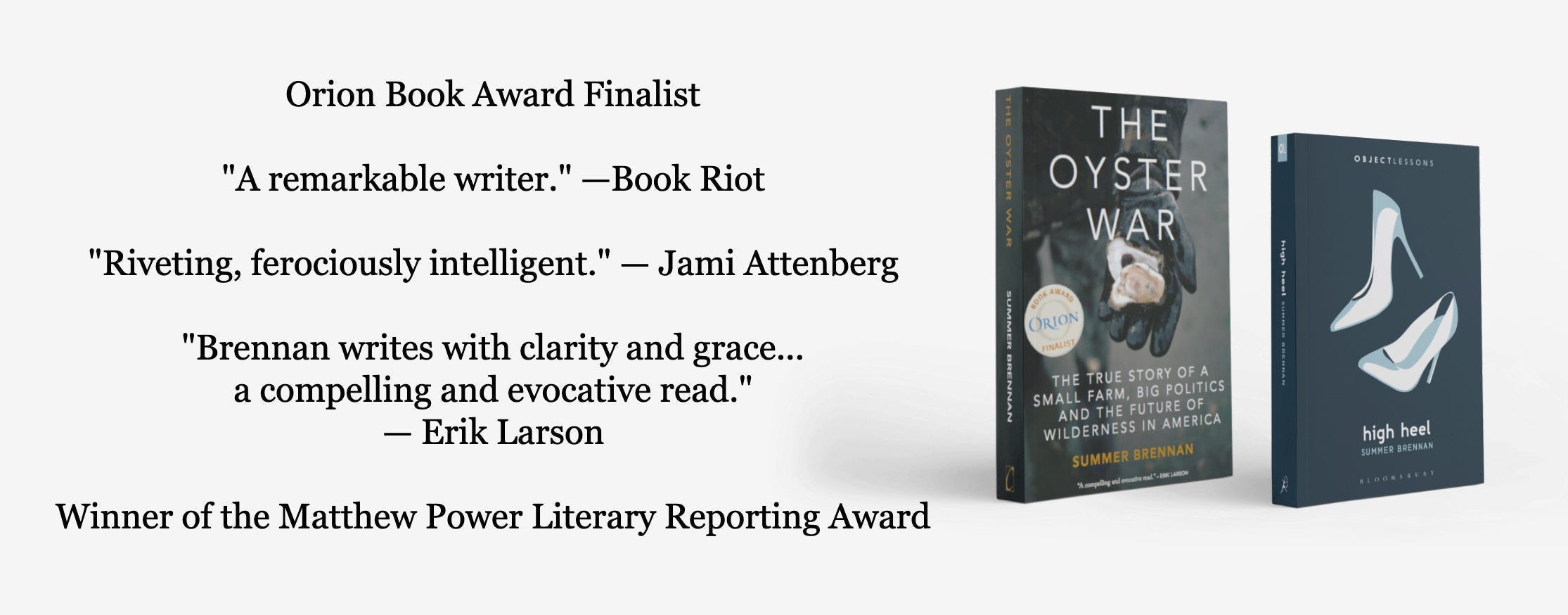
Enjoy my writing and want to support it? Become a paid subscriber today. You’ll get full access to craft talks, essays, notebook entries, sketchbook pages, and the popular semiannual write-along workshop Essay Camp. You can also buy my books The Oyster War and High Heel, “like” my posts by tapping the heart icon, share them on Substack Notes or other social media, and/or send them to a friend.
Glad to see that you're willing to pay for reviews. It's remarkable how many are not, or don't think a good review takes a lot of time to write.
The destruction of book reviews really hits the middle market, i.e. not the super star authors or the ones just starting out. In science publishing books are a really tough gig. The average advance is $5K if you're lucky, and as a friend once said, you really only start earning around $15K per year from royalties when you have a backlog of 5 books already in print. He told me that 30 years ago and I suspect it's even worse today.
If I didn't have the New York Review of Books and the Financial Times (which has a great Saturday review section), not sure where I would find out about books.
Your recommendation of books as an antidote to the scourge of social media and doomscrolling is spot on. We do need books. They are one of the essential tools—the main tool—I have to try to limit my time wasted online.