Icarus
When the worst comes and the wax melts.
Dear readers, I initially shared a version of this yesterday before it was ready; before I’d removed some writerly worries that should not have been included. I also said something about wanting to focus for a while on writing about politics, and then some of you reacted quite negatively to that. I am not abandoning the kinds of essays I usually write here. But for personal reasons, which perhaps you can glean from the text below, I’d also like to exercise some caution when sharing personal work at this time. Plus, I feel the current moment in politics and culture is pressing and needs to be discussed. I will indeed be writing some things that are in conversation with political texts and engaging with the current moment, but it may not be what you fear. If you don’t like something I write, you can always just skip what doesn’t resonate. Thank you for your understanding.
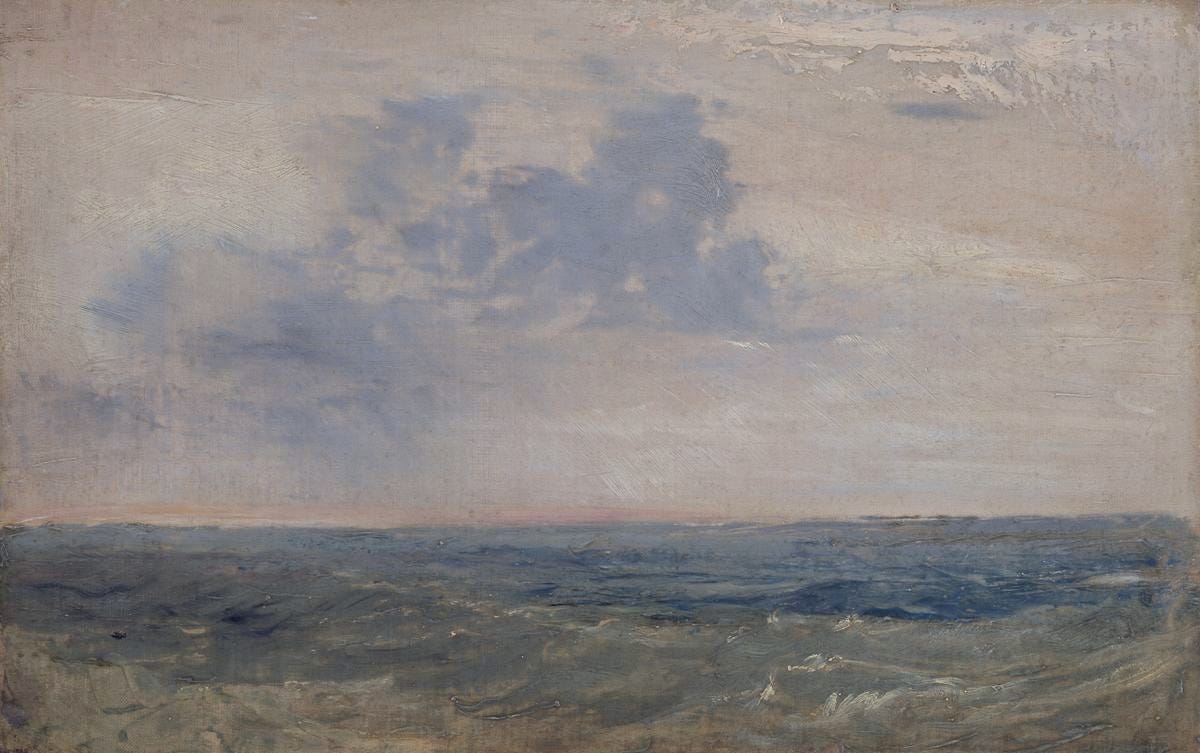
The real story of Icarus and Daedalus, a Greek myth about a father and child, is generally understood to be one about hubris. Said hubris is usually attributed to Icarus. The parent and his grown child find themselves imprisoned in a labyrinth, and to escape this labyrinth, Daedalus, the father, makes wings for them both from the fallen feathers of birds held together with wax. Most of you know what happens next. The wings are successful. They fly. They manage to escape. But just as they are almost over this vast sea that lies between their prison and safety, Icarus flies too close to the sun, the heat melts the wax, and Icarus falls and is lost.
Despite the fact that this is a story of failure—a father who wishes to save his child, and then almost succeeds, but then in the end does not—the name “Daedalus” has often been used for various optimistic endeavors, from the designing of an interstellar probe in the 1970s (“Project Daedalus”), to an AIDS fundraising organization in the 1990s (“The Daedalus Project”). The name “Daedalus” is often used with a focus on the wings, on the escape, on the flight, on that desire to achieve the impossible; to save the one you love the most. There is no denying that, whatever else happened after, both Daedalus and Icarus did get out of that labyrinth. They flew.
Not too long ago, I told a friend that I no longer felt like sharing things about my personal life on the internet. I felt like Lady Godiva, riding around on my horse, and I wanted to put my fucking clothes on. At the very least, I didn’t want to write about personal things as they were happening. I had done versions of this in the past, and always regretted it. I had no way of knowing if something I had written in those moments was good, or if writing it had simply felt good. All of my meters for judgement were off. It left me feeling more exposed than supported or “heard,” or whatever the positive things are that one is supposed to feel when being open with strangers on the internet about your life.
So anyway: Icarus and Daedalus.
Last week I decided to resume my project of revisiting old notebook entries, where I share new or edited versions of things I’ve written before, published at the time in rougher form. And yes, a number of these are quite personal, but I felt more comfortable looking at them now with that wiser angel of Time sitting at my side as co-editor.
Last Tuesday, I picked one about caring for my father during a serious illness in 2021, and added in some aspects of a previously unpublished poem. While the original entry had another title, I called this new version “Daedalus,” after the poem. This is that post.
In this (surely still-rough) sketch of part of an essay that dissolves into a poem, the roles are reversed: the parent is Icarus, and Daedalus is the daughter. She is trying to construct the wings to fly from the labyrinth of an ICU. Like others who used the name Daedalus, I was thinking only of the ambition, the non-negotiable determination, the flight, the act of love. I was aware, vaguely, even when writing it, that all of our wax eventually melts; that the sea tosses below us all. But it seemed far off, a nod to the bittersweet reality of deep love and devotion in this world.
My myth is not that myth. In my myth, it is Daedalus the daughter, not Icarus the father, who didn’t listen; who assumed that something would be okay, when in fact it would not. It was she who should have known better.
I can’t write more except to say that the wax has melted, and I am alone now with my useless wings on that unbearable far shore, with an empty sea crashing before me. I am at least trying to remember, if not yet able to be consoled by, that line from the Jack Gilbert poem Failing and Flying: that despite the unendurable, unrepeatable sorrow of falling, Icarus also flew.


I'm normally weird about sympathy and "virtual hugs" and all that, but in this case I'll take it if you have any you want to give. 💜
I'm happy to send you virtual hugs and sympathy and empathy because the story of the daughter, not the father, not listening deeply resonates with me (or to be more exact, I heard but was paralyzed by fear and shame.) Thank you for republishing this essay.
As for what you continue to write ... all I ask is that you write. I take in a hefty dose of politics already, how can I not when it is my so-called president taking a wrecking ball to American democracy and the rules-based international order. But clear, thoughtful, contextual political writing is in short supply (imho). Yes, we have Snyder and Krugman and HCR and Joyce White Vance here on Substack, and I read them. Too many people write politics in order to trigger a reaction, not to elicit thoughtful comment. You are not one of those. So ... write on. As you say, anyone who doesn't want to read your essay, can just move on. Please, don't censure yourself. 🩷