

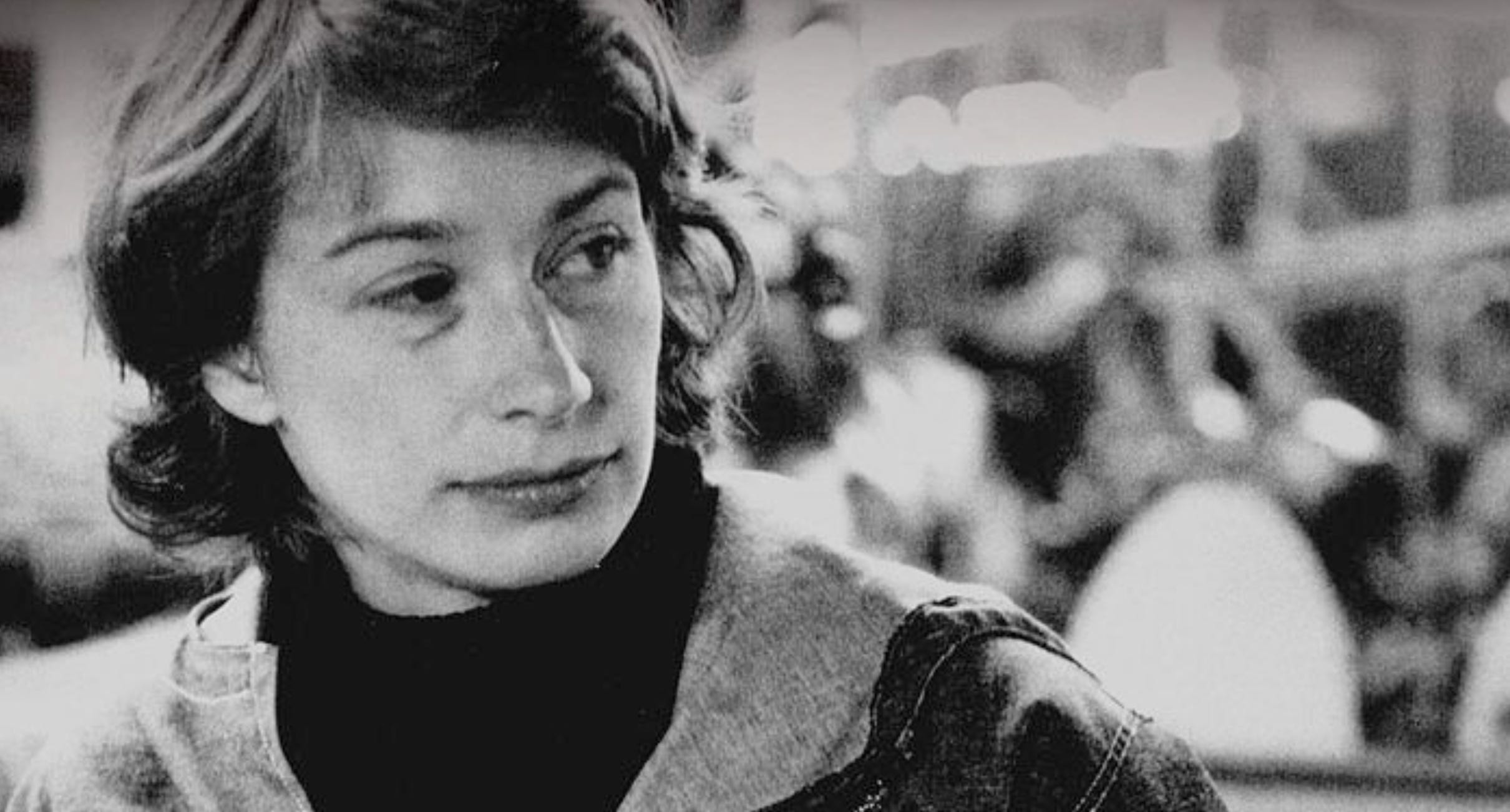
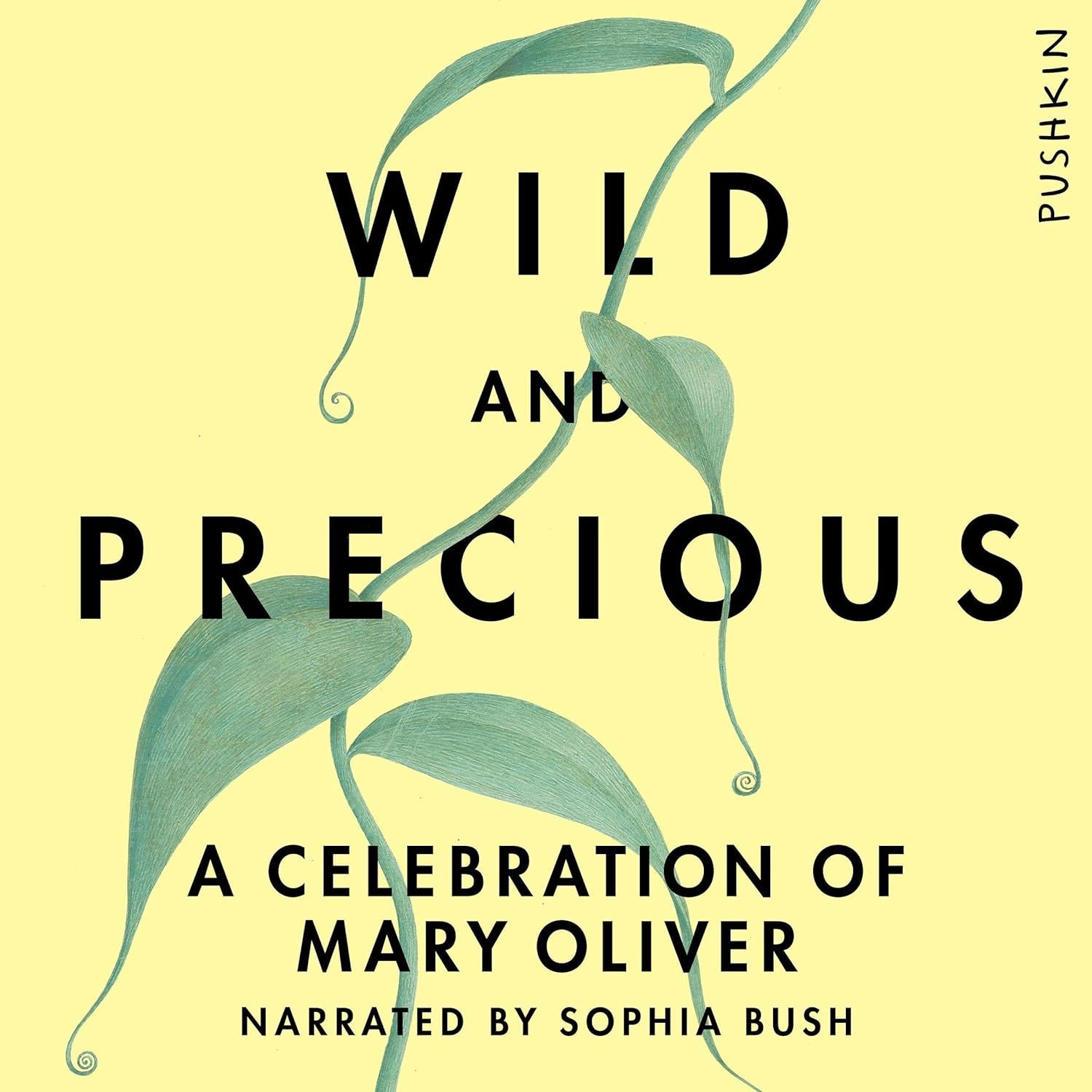
On a summer Monday several years ago, I went out in the July heat and made my way across the northern edge of the Jardin Nelson Mandela, the smell of chlorine wafting up through grates from the underground swimming pool. In an old building on the rue Coquillière, I passed through two sets of ancient wooden doors and then descended an absurdly narrow spiral staircase down to a basement recording studio. I was there to give an interview about the late poet Mary Oliver, who was my college writing teacher, academic advisor, and dare I say it, mentor. Pushkin Industries, a podcast and audiobook company, was in the process of making a book-length audio documentary about her, which has since been finished and can be found here. They wanted to speak to people who were inspired by her, who had known her, and former students of hers like myself.
Before the interview, the producer had asked me to prepare “two or three poems” of Mary’s that were meaningful to me. I chose two: “Rage” and “Tecumseh.” I chose “Rage” because it isn’t a very well known poem, even though it comes right before the extremely famous “Wild Geese” in her 1986 collection Dream Work. (In case you don’t remember “Wild Geese,” it’s the one that begins: “You do not have to be good…”).
“Rage” is important because without it—without its terrible, brutal specificity— poems like “Wild Geese” are taken out of context. This is one of those little things about the world that infuriates me, that people are always misunderstanding Mary Oliver, are bad readers of her, in fact, but there’s little I can do about it. In any case, “Rage” is the scorched internal landscape on which the “sun and the clear pebbles of the rain” from “Wild Geese” are falling. The dark sky of “Rage” is what clears to become “clean and blue,” with wild geese flying across it, “announcing your place in the family of things.” The story of “Rage” is the story of what happened to the “soft animal of the body,” of her body, before it found a way to simply “love what it loves.”
Rage
by Mary Oliver
You are the dark song
of the morning;
serious and slow,
you shave, you dress,
you descend the stairs
in your public clothes
and drive away, you become
the wise and powerful one
who makes all the days
possible in the world.
But you were also the red song
in the night,
stumbling through the house
to the child’s bed,
to the damp rose of her body,
leaving your bitter taste.
And forever those nights snarl
the delicate machinery of the days.
When the child’s mother smiles
you see on her cheekbones
a truth you will never confess;
and you see how the child grows–
timidly, crouching in corners.
Sometimes in the wide night
you hear the most mournful cry,
a ravished and terrible moment.
In your dreams she’s a tree
that will never come to leaf–
in your dreams she’s a watch
you dropped on the dark stones
till no one could gather the fragments–
in your dreams you have sullied and murdered,
and dreams do not lie.
(from Dream Work)
I first read this poem when I was fourteen or fifteen years old. There was a lot of difficulty and darkness going on in my own life then. I didn’t relate to the specific narrative—that’s not what happened to me, other things did—but the poem’s images have stayed with me for decades. Those terrible things that snarl the delicate machinery of our days. That dream logic, of the watch dropped on the stones till no one could gather the fragments. I knew that it was a personal poem, hidden in the second and third person; that you, that she.
I feel a lot of frustration when people in the literary world, who don’t really seem to know anything about Mary, don’t know about “Rage” or where it came from, talk about her like she’s just some kind of Goop-ified Instagram poet. It’s as if even ostensibly well-educated people forget that Pulizer-prize winning poets have published books, and that those books are available, and that you can read them, and might wish to do so before commenting publicly. I always assume that these people who don’t understand Mary, who say insulting things about her, only know her poems because they heard someone read excerpts of them out loud at the end of a yoga class.
This was especially difficult just after she died. Several people have written more or less the same essay, again and again over the years, the thesis of which is “I thought Mary Oliver poetry must be stupid, because lots of people liked it, but then it turned out I was wrong.” Everyone craves authenticity, and yet when someone is as nakedly earnest as Mary was, a certain kind of person can find that hard to deal with. Mary was private. Very private. And on the blank outer wall of that privacy, lazy images were projected. In a world of oversharing and the attention economy, a desire for privacy is suspect. But her desire for privacy came from some historically significant places. The benevolent grandmother of their condescending fantasies had nothing to do with the real woman I had known and loved, this weathered, chain-smoking lesbian who counted among her closest friends the filmmaker John Waters.
I was surprised by how many personal questions I was asked during the course of the interview by Pushkin. Who was I when I arrived in Mary’s classes at the age of eighteen? How did I relate to the physical landscape where I grew up? What did I think of the resonance between the darkness in Mary’s childhood and the one in my own? I had just spent a month caring for my beloved, ill father, and was not in the best or most optimistic frame of mind. Perhaps I should have refused the interview, but I wanted people to know more about Mary’s depths, and feared that a project like this might overlook them.
The second poem I had prepared, “Tecumseh,” is from the 1983 collection American Primitive.
Tecumseh
by Mary Oliver
I went down not long ago
to the Mad River, under the willows
I knelt and drank from that crumpled flow, call it
what madness you will, there’s a sickness
worse than the risk of death and that’s
forgetting what we should never forget.
Tecumseh lived here.
The wounds of the past
are ignored, but hang on
like the litter that snags on the yellow branches
newspapers and plastic bags, after the rains.Where are the Shawnee now?
Do you know? Or would you have to write
to Washington, and even then
whatever they said,
would you believe them? SometimesI would like to paint my body red and go out into
the glittering snow
to die.His name meant Shooting Star.
From Mad River country north to the border
he gathered the tribes
and armed them one more time. He vowed
to keep Ohio and it took him
over twenty years to fail.After the bloody and final fighting at Thames
it was over, except
his body could not be found.
It was never found
and you can do whatever you want with that, sayhis people came in the black leaves of the night,
and hauled him to a secret grave, or that
he turned into a little boy again, and leaped
into a birch canoe and went
rowing home again down the rivers. Anyway,
this much I’m sure of: if we ever meet him, we’ll know it,
he will still be
so angry.
The whole interview ended up feeling quite emotional for me. We talked a lot about time and death. I hadn’t really thought beforehand about the fact that I had chosen two dark poems, and both of them with a kind of violence at the center. They had just seemed important to me, if one wanted to understand Mary’s core themes.
“Tecumseh” was an important poem to me in high school, long before it became fashionable for white people to announce on which stolen tribal lands they were about to enjoy a Thanksgiving dinner. Even today, whenever I read it aloud to someone, I will sometimes feel tears well up. It’s that set up: he vowed to keep Ohio and it took him over twenty years to fail.
I ended up reading a third poem as well, which I hadn’t prepared, called “The Kookaburas,” from her 1992 collection New and Selected Poems. I hadn’t even remembered much about it except that there were kookaburras in it, and that it had given me this unsettled, unnamable feeling, which had stayed with me through the decades, and which came up in the interview.
The Kookaburras
by Mary Oliver
In every heart there is a coward and a procrastinator.
In every heart there is a god of flowers, just waiting
to stride out of a cloud and lift its wings.
The kookaburras, pressed against the edge of their cage,
asked me to open the door.
Years later I remember how I didn’t do it,
how instead I walked away.
They had the brown eyes of soft-hearted dogs.
They didn’t want to do anything so extraordinary, only to fly
home to their river.
By now I suppose the great darkness has covered them.
As for myself, I am not yet a god of even the palest flowers.
Nothing else has changed either.
Someone tosses their white bones to the dung-heap.
The sun shines on the latch of their cage.
I lie in the dark, my heart pounding.
We talked about regret, about how the things we regret the most, the things that haunt us, are the things we’ve done or failed to do out of our own weakness. Absorbed in our own dramas, avoiding our own fears, we can barely stand to look at the evil we do through inattention; the ways in which we become the worst versions of ourselves.
In every heart there is a coward and a procrastinator. The interviewer asked me how I try to be, instead, “a god of flowers.” I struggled with that. In the poem, Mary herself said that even she was not yet a god of even the palest flowers. I didn’t know how to answer, because I don’t know that I did try to do such a thing—attempt to be a god, and a god of flowers at that. The interviewer—whose voice has been completely removed from the audiobook’s final draft, I never spoke to the official narrator, Sophia Bush—kept wanting me to speak in the first person, to say what I myself do. But it didn’t feel natural. I’m not sure that I do see things like that, or that I had meant to apply my ideas about Mary’s poems to my own personal experience. Thinking about it now, I’m not sure that a “god of flowers” is something that anyone can strive to become, or that one exists, “just waiting” in the heart of everyone. It’s possible that I didn’t really understand the question.
At the end of the interview, which I wasn’t paid for, I emerged back into the sunny, bright, chlorine-smelling world, feeling as if I had time-traveled. I could get nothing done for the rest of the day. The interview felt like it went well, or I hoped that it did. When I finally heard the finished product, my own segment made me flinch. It was strange to discover the specific way in which our wide-ranging, two-hour conversation had been whittled down into a few specific minutes. I regretted my modesty. When they asked me for a bio, I told them to just say I was a writer, before later discovering that every other author they interviewed had asked them to plug their books by name. I thought it made me come across as unprofessional, but oh well. More and more I find myself valuing my privacy, and am hesitant to break the seal.
A version of this essay was originally published in 2022.

Enjoy my writing and want to support it? Become a paid subscriber today. You’ll get full access to craft talks, essays, notebook entries, sketchbook pages, the popular semiannual write-along workshop Essay Camp, and The Book Supplement, a new book review column with guest reviewers. You can also buy my books The Oyster War and High Heel, “like” my posts by tapping the heart icon, share them on Substack Notes or other social media, and/or send them to a friend.
This is strong and beautiful, thank you. I was just reading from her book, Little Alleluiahs, before opening this article. You remind me of something Orson Scott Card wrote in his book, Speaker for the Dead. Paraphrasing, a character says, when we sanitize our recitation of the life of someone who just died, it’s as if we kill them again. We smooth over the rough, hard places, to make them easier to digest than they were in real life. We remove the secret of how they became the complex, richly textured person who enhanced our lives. Hagiographies almost always fail because they are almost always two dimensional. Thanks for reminding us to seek out everything that made her special.
I recently read Devotions, and it’s the only full book of Mary Oliver poems I’ve read. I wonder if people misinterpret her poems simply because they have never seen her more viral works in the context of her larger full body of work? It’s kind of a problem with the reading of all poetry nowadays — more people reading single poems in isolation, devoid of the larger container that a poetry book provides.
In any case, thanks for sharing your experience and these poems.