

Hello and welcome to the third issue of The Book Supplement.
If you appreciate this coverage and want to see more, please consider becoming a paid subscriber. Your subscriptions go directly to paying freelance critics. Even a few dollars a month will help keep this going.
In this issue:
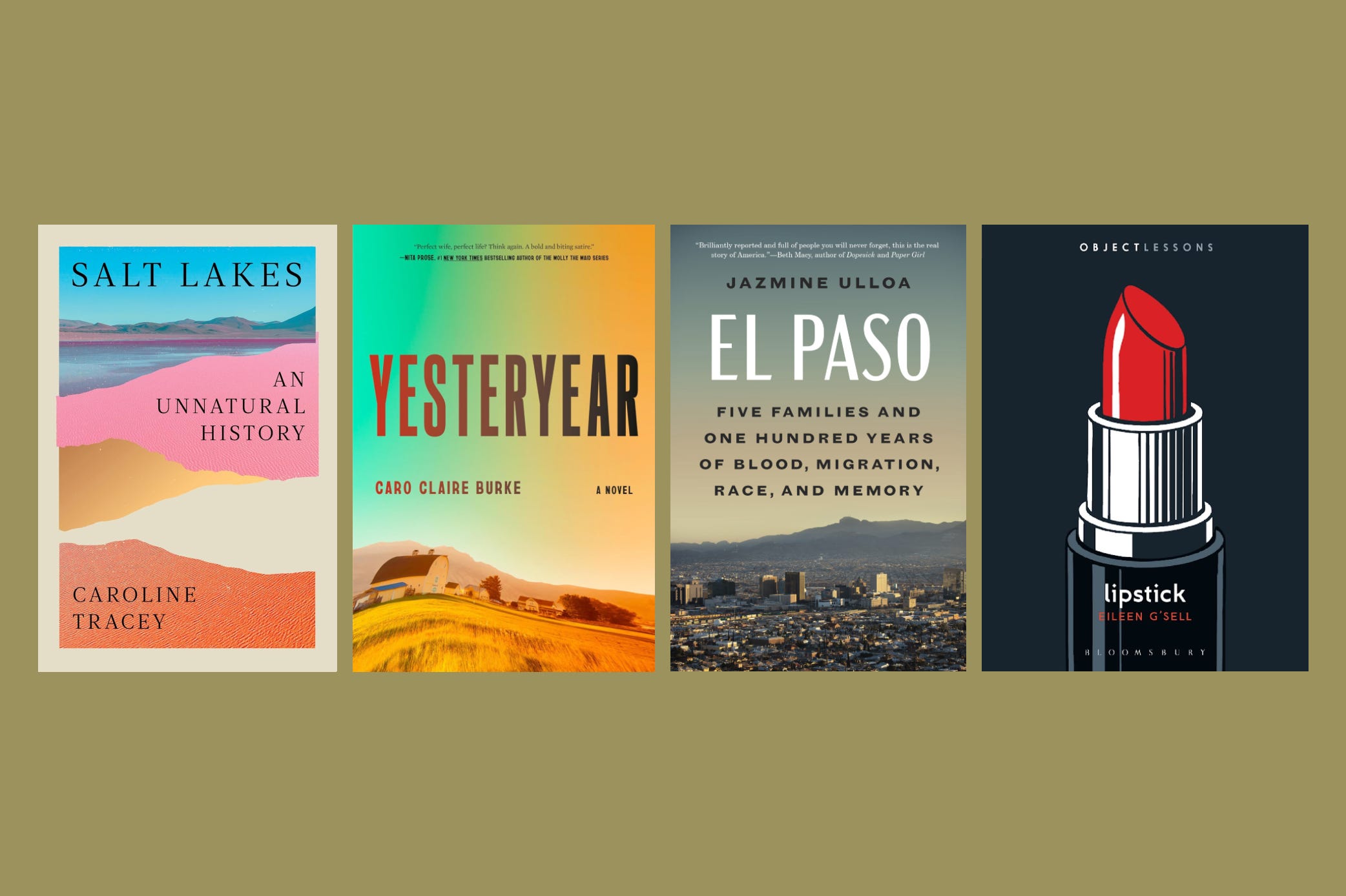
SALT LAKES: An Unnatural History, by Caroline Tracey
YESTERYEAR, by Caro Claire Burke
EL PASO: Five Families and One Hundred Years of Blood, Migration, Race, and Memory, by Jazmine Ulloa
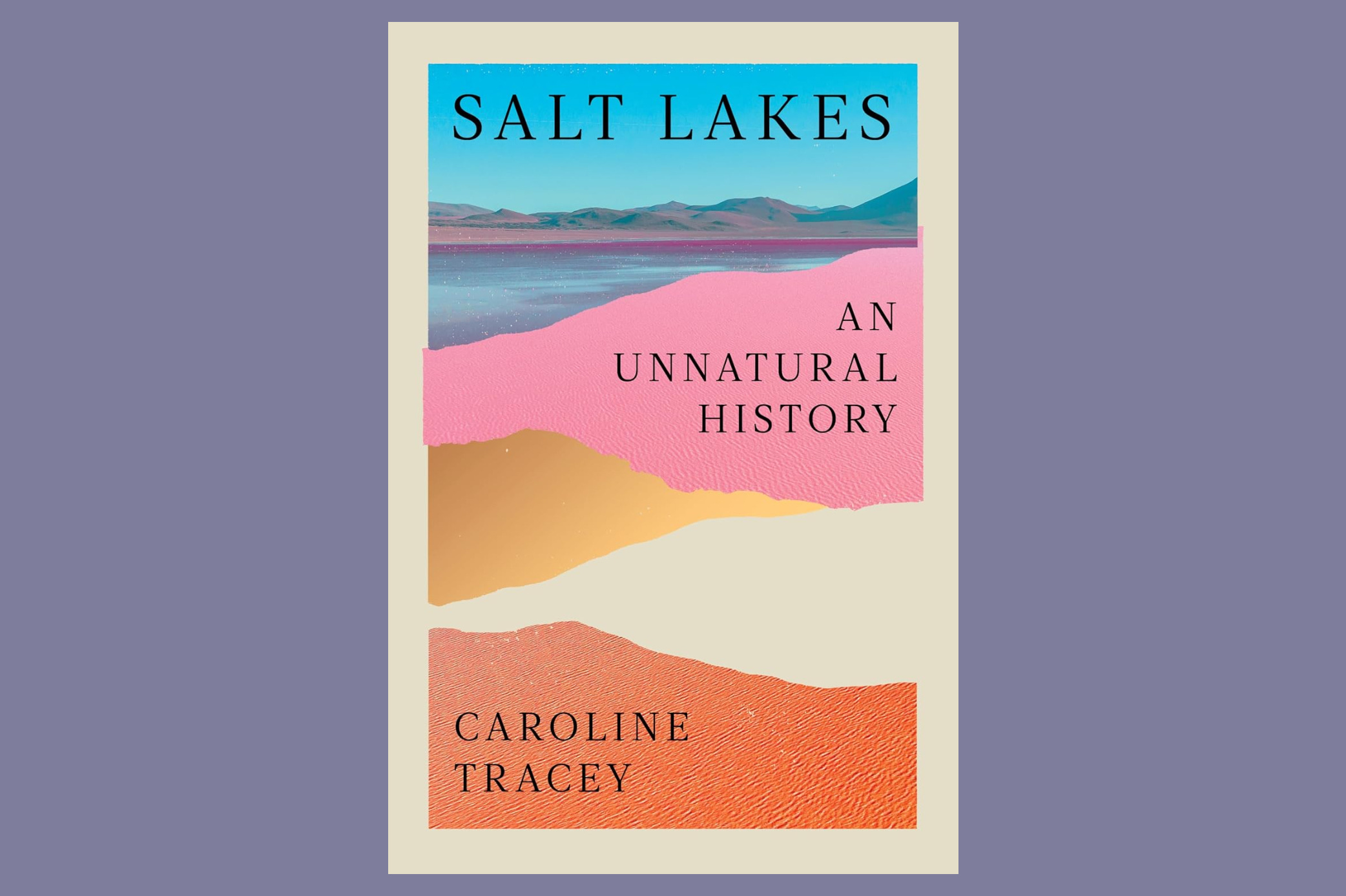
SALT LAKES: An Unnatural History, by Caroline Tracey
W.W. Norton & Company; 272 pages; $31.99 US Hardback
At first, I found the lakes of the American Southwest vaguely uncanny, ultra-blue and surrounded by stone, perfect mirrors of the surrounding mesas, the troubled New Mexico skies. They were nothing like the lakes I grew up with, the tea-colored, pine-scented waters of upstate New York and rural Massachusetts. I fell in love immediately with the quiet colors of the desert and the rich, warm scents of the high, arid forests, but the lakes took time to understand. They are so conspicuously altered by humanity; one couldn’t pretend at any romanticized relationship between human and landscape. Our handprints are everywhere, our signature of death writ so clearly on their dusty, shallow beds.
Salt Lakes: An Unnatural History, by writer and geographer Caroline Tracey, presents an alternative way of reading these bodies of water, not as sites of defeat and self-flagellation, but places of resilience and hope. This engaging, genre-crossing book—it could be shelved under nature writing, travelogue, memoir, or history—is part of a growing movement that rails against our dominant understanding of nature. For too long, bodies of water (and plants and animals) have been defined by their use-value, their ability to “serve” human flourishing. We’ve used our scientific understanding to quantify their significance, rendering them as dull and flat as any economic actor. But Tracey joins authors like Andreas Weber, Robert MacFarlane, and Robin Wall Kimmerer in arguing that the natural world deserves more than that. Rivers can be alive, plants can be kin, and salt lakes can be queered.
Before Tracey can begin making her greater argument about queer ecology, she first must prove that salt lakes are worthy of all this attention. Over the course of a decade, she visits a number of these ecosystems, traveling from Utah to Kazakhstan to Mexico. “People often refer to salt lakes as ‘dead,’ inferring that they are absent of life. But the lakes overflow with life—just in specific, small forms,” she writes. Not only are they fascinating studies of life finding its improbable, briny way, they’re also jaw-droppingly lovely (at least to Tracey). This matters, too: “Our earthly future, I knew deeply and resolutely, depended on loving the lakes in all their mysterious, freakish, sacred beauty.” To embrace a place like California’s Salton Sea is challenging but vital. From these strange, disturbed places, we can learn to accept the damage we’ve done to the natural order of things and begin reparations.
Throughout the book, Tracey weaves in stories from her own love life, which are intended to help bolster the point that salt lakes fall under the purview of queer ecology. “As a perspective on landscapes, queer ecology is often used to denote places that are denigrated, unruly, and inhabited by unusual, improbable groupings of species,” she explains. Sometimes this works, like when she describes falling in love with her wife, set against the backdrop of Mexico City’s marshy Texcoco Lake. In other instances, as in her chapters spent with a former boyfriend, the results are less compelling. Overall, Salt Lakes is a strong debut and a valiant attempt to play with form. When her writing sings, as it does when she’s describing her rough-and-tumble encounters with ranching, it does so clearly, with voice and heart.
—Katy Kelleher
SALT LAKES is Caroline Tracey’s first book.
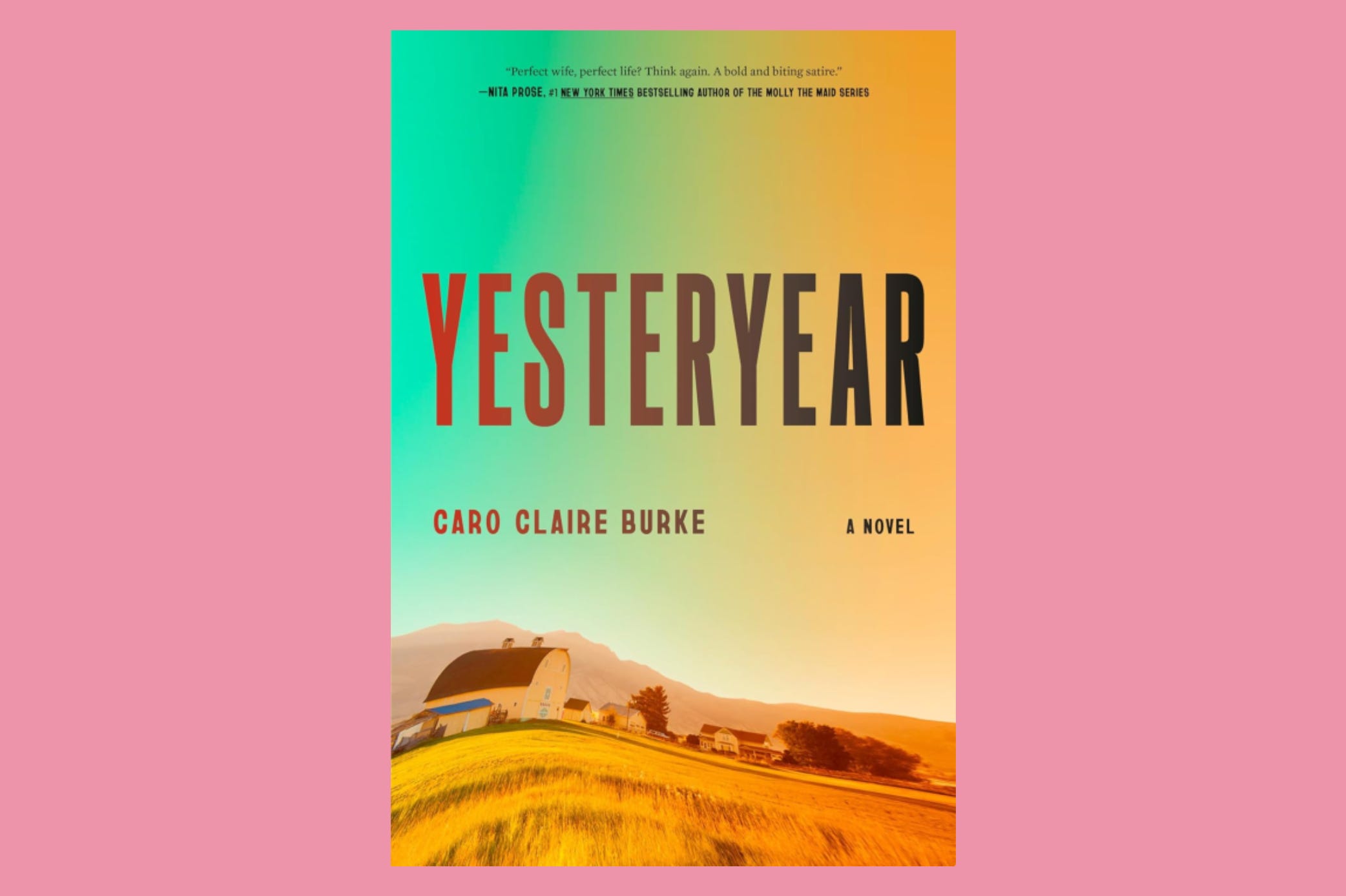
YESTERYEAR, by Caro Claire Burke
Knopf; 400 pages; $30.00 US Hardcover; $14.99 eBook
Natalie Heller Mills is an American mother of six who has built her social-media fame posting about her picture-perfect homesteading lifestyle on a 500-acre Idaho farm. What her millions of followers (whom she dubs “Angry Women”) don’t know, is that her life—complete with detached children and checked-out husband—is a carefully curated facade propped up by a host of off-camera assistants. But Natalie’s world is shattered when she inexplicably wakes up one morning on an early-nineteenth-century version of her farm, and must struggle to return to the present day.
The narrative alternates between this struggle and interludes in which she recalls her devout Christian upbringing; her full-ride education at Harvard; her lackluster marriage to a wealthy, right-wing politician’s son (a “fairy-tale fever dream of a man-child”); her risky investment in the farm; and the escalating measures she must take to uphold the image of a traditional family.
Caro Claire Burke packages her story like the glossy social-media posts of her indelible antihero, and the satire is clear: Natalie is a thinly veiled version of Instagram influencer Hannah Neeleman of Ballerina Farm. Burke uses the page-turning trappings of a thriller to launch a blistering takedown of America’s current ideological climate, exploring political radicalization, religious psychosis, parasocial relationships, child exploitation, and the performance of womanhood.
Yesteryear’s reputation precedes it: Knopf won the manuscript in a fifteen-publisher bidding war, and Amazon MGM Studios secured the film rights. Anne Hathaway is set to produce and star. That’s plenty of pre-pub pressure for any author, let alone a first-timer, but however high the expectations, they are handily met by Burke’s propulsive, timely debut.
— Katie Calautti
YESTERYEAR is Caro Claire Burke’s first book.
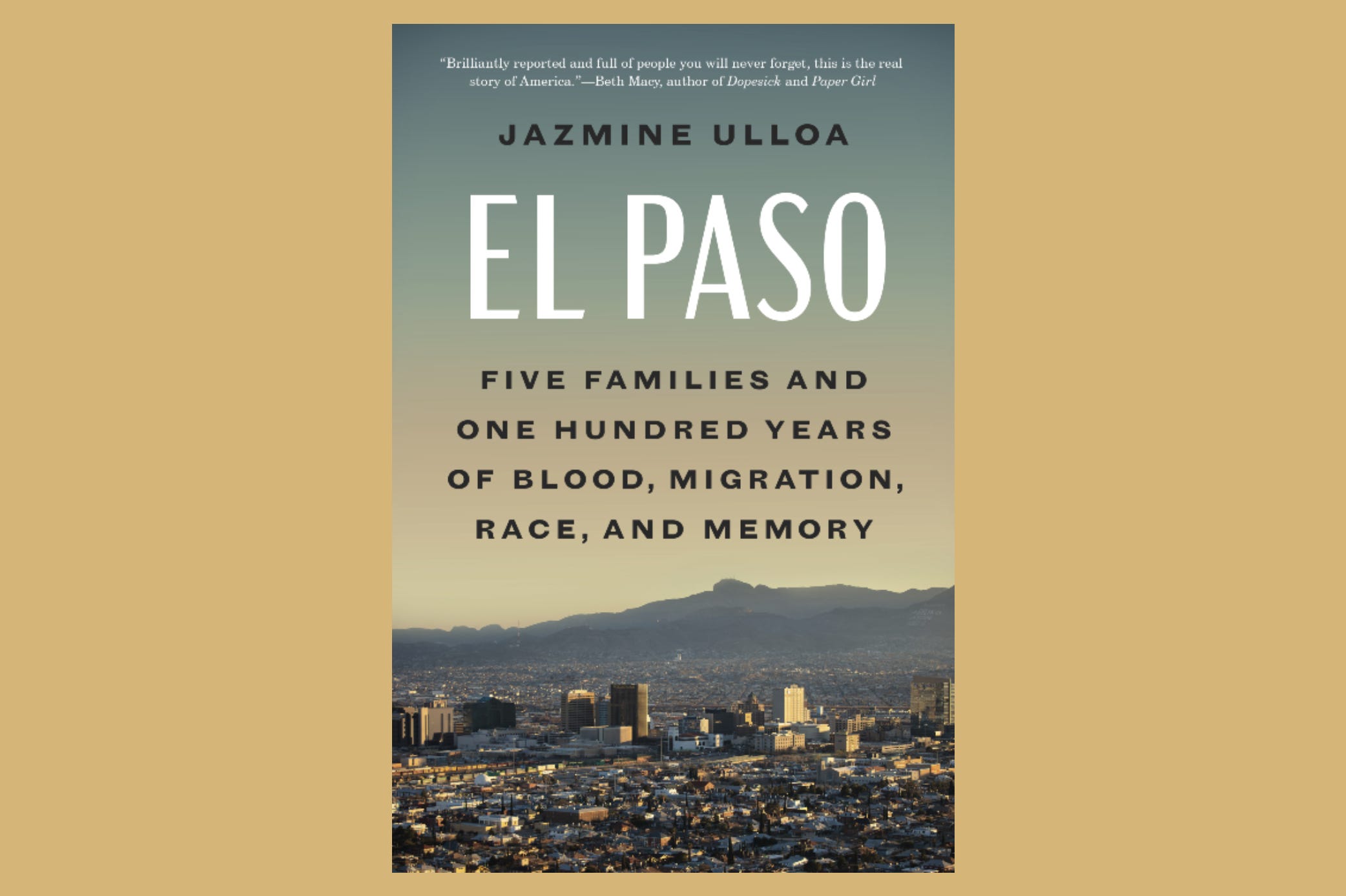
EL PASO: Five Families and One Hundred Years of Blood, Migration, Race, and Memory, by Jazmine Ulloa
Dutton; 352 pages; $30.00 US Hardcover
As New York Times journalist Jazmine Ulloa writes in her debut: “The inability of Americans to confront the uglier side of our history, to tell our story honestly—to remember the origins, both rich and violent, that made El Paso and thus our nation—appeared to me to be at the core of the cycle of violence, with blood spilled in defense of one of its deadliest myths: that such a pure white culture had ever existed on land so brown.”
Beginning with the 2019 mass murder of people presumed to be Mexican at a Walmart by a white nationalist in her hometown of El Paso in 2019, Ulloa explores twin themes of violence and the American dream. As we follow the lives of five families from the nineteenth century to the present, including individuals of Chinese and Guatemalan as well as Mexican descent, this work of literary nonfiction evokes the feel and pull of an epic, generation-spanning novel. Drawing on interviews, archives, academic scholarship, and other reporting, Ulloa constructs a narrative history of El Paso, the US-Mexico borderlands, and immigration that is both beautiful and heartbreaking.
After returning home to report on the 2019 Walmart massacre, Ulloa begins to suspect that the story of El Paso is central to the story of America itself. She becomes certain while covering the U.S. Capitol on January 6, 2021, as rioters carrying Confederate flags and Nazi insignia seize the building, and security guards sweep reporters (including Ulloa) and members of Congress away via underground passages. From a prologue that recounts the story of the child heroes of Chapultepec, martyred while defending Mexico City from the invading U.S. military in 1847, to the detention of immigrant children separated from their families in 2018, Ulloa invests her subjects with a sense of urgency and meaning.
In this newly revealed America that has long existed beside the old, she positions her hometown as a kind of modern-day Ellis Island. “El Paso is alive. It breathes and heaves with human life. Your poor and huddled masses. Your staunch conservatives. Your rebels and living saints. Your Border Patrol officers and paisanos. And you and me.” It is a point of entry with a difference, though. Here, as history shows, migrants are both drawn in and deported, destined to be “watched, bound, and shackled.” This is a story that transcends the US-Mexico border, with something fundamental to tell us about America itself.
El Paso is written for two audiences: Latinx communities like those found in El Paso, as well as readers in the broader America that has so often excluded them. This ambitious portrait of a nation, told through the assemblage and juxtaposition of diverse, individual lives, culminates in something truly impressive that is more than the sum of its parts.
— Michael L. Trujillo
EL PASO is Jazmine Ulloa’s first book.
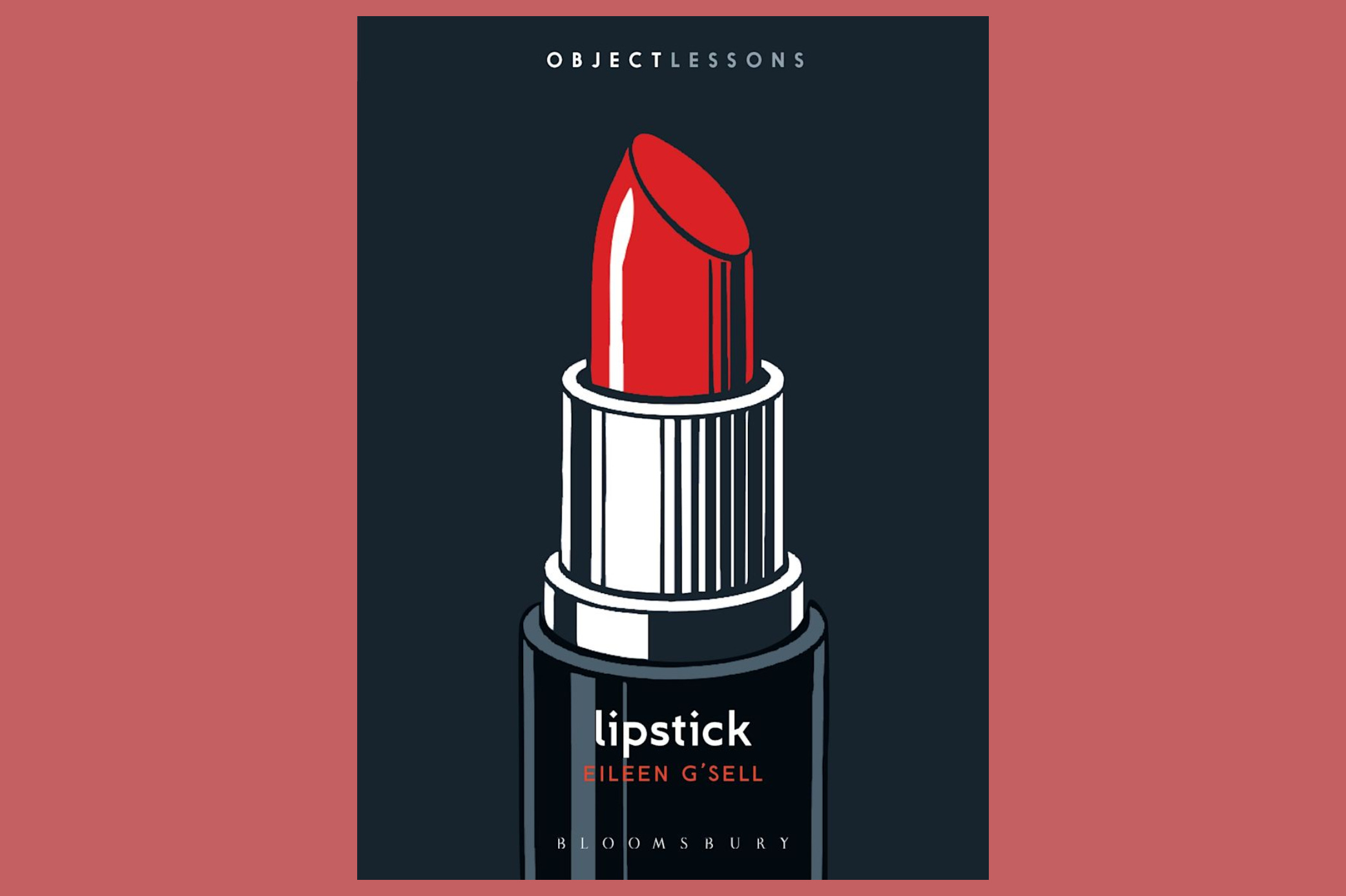
LIPSTICK: An Object Lesson, by Eileen G’Sell
Bloomsbury Academic; 200 pages; $14.95 US Paperback; $13.45 eBook
Foundation conceals. Mascara enhances. But lipstick? Lipstick transforms.
That’s the premise of Eileen G’Sell’s brilliant ode to the most conspicuous of cosmetics, one of several recent volumes in Bloomsbury’s “Object Lessons” series. Like the other books in this collection, Lipstick offers a radical perspective on something ordinary, or in this case, iconic. After all, has there ever been a more potent—or fraught—symbol of femininity than an (ironically phallic) tube of lipstick?
Sure, a painted mouth can make one more beautiful or alluring, but it also has the power to shock, repulse, challenge, titillate, disturb, and as G’Sell puts it, “knock gender norms off balance.” It may be “a small luxury,” she writes, “but its power of reinvention is positively epic.”
G’Sell—a poet and critic who teaches creative writing at Washington University of St. Louis—discovered lipstick’s transformative power early in life. At eight years old, her first job involved delivering Avon catalogs to her neighbors’ doorsteps. Even better than the three to four dollars she earned per route were the free lipstick samples she received as part of her compensation. But lipstick didn’t turn G’Sell into a beauty. She was still bullied for her “hairy legs,” her “uneven bangs,” and her “off-brand denim,” but lipstick did obliterate her “meek façade.”
“I became transfixed at how I could transform myself with a careful swipe of a lipstick tube,” she writes.
Is lipstick inherently feminine? In much of the ancient world, a painted pout said more about your economic status than your gender. Second-wave feminists maligned lipstick as a tool of the patriarchy and a capitulation to the male gaze, yet G’Sell shows us how different individuals—male, female, nonbinary, cis, trans—have used lipstick to subvert or destabilize that gaze, from Madonna to Courtney Love, Janelle Monet to Chappell Roan (whose theatrical makeup owes a debt to drag).
Gen Z appreciates lipstick’s slippery quality. In the US, nearly 30 percent of them identify as “queer,” while 40 percent say they don’t see gender as binary. These young people buy more lipstick than any other demographic. To them, lipstick is not a requirement of femininity, something to conform to or rebel against—they feel free to use it as a tool of self-expression and reinvention.
G’Sell’s reflections on this controversial tool of artifice is not a definitive history, but rather a rousing manifesto. “Lipstick’s possibilities should be available to anyone curious,” she concludes. “May a femme-friendlier future welcome that pleasure.”
— Raquel Laneri
Other titles by Eileen G’Sell: Life After Rugby and Francofilaments.
Other recent Object Lessons books include: Microphone by Ralph Jones, Snack by Eurie Dahn, Stock Photo by Simona Supekar, and Ballot by Anjali Enjeti.
Masthead
Editor: Summer Brennan
Contributing Editor: Howard Mittelmark
Guest reviewers: Katy Kelleher is the author of The Ugly History of Beautiful Things; her nature writing has appeared in National Geographic, Nautilus Magazine, and The Paris Review. Katie Calautti is a writer, bookseller, medium, and cemetery historian. Michael L. Trujillo, author of Land of Disenchantment, is the Associate Chair of Chicana/o Studies at the University of New Mexico. Raquel Laneri is a journalist and critic who writes the newsletter Wearable Art.
Correction: An earlier version of this article imprecisely stated that Lipstick was Eileen G’Sell’s first book. In fact it is her first book that is not a poetry collection.

The Book Supplement is free but paid subscriptions make it possible. Become a paid subscriber today, or sign up as a Founding Member to defend literature from the forces of tyranny. If you enjoyed reading this issue, please consider sharing it with a friend.
Those covers! Art…
Wonderful book selections and excellent reviews!