

Hello and welcome to the fourth issue of The Book Supplement.
If you appreciate this coverage and want to see more, please consider becoming a paid subscriber. Every little bit helps to keep this going.
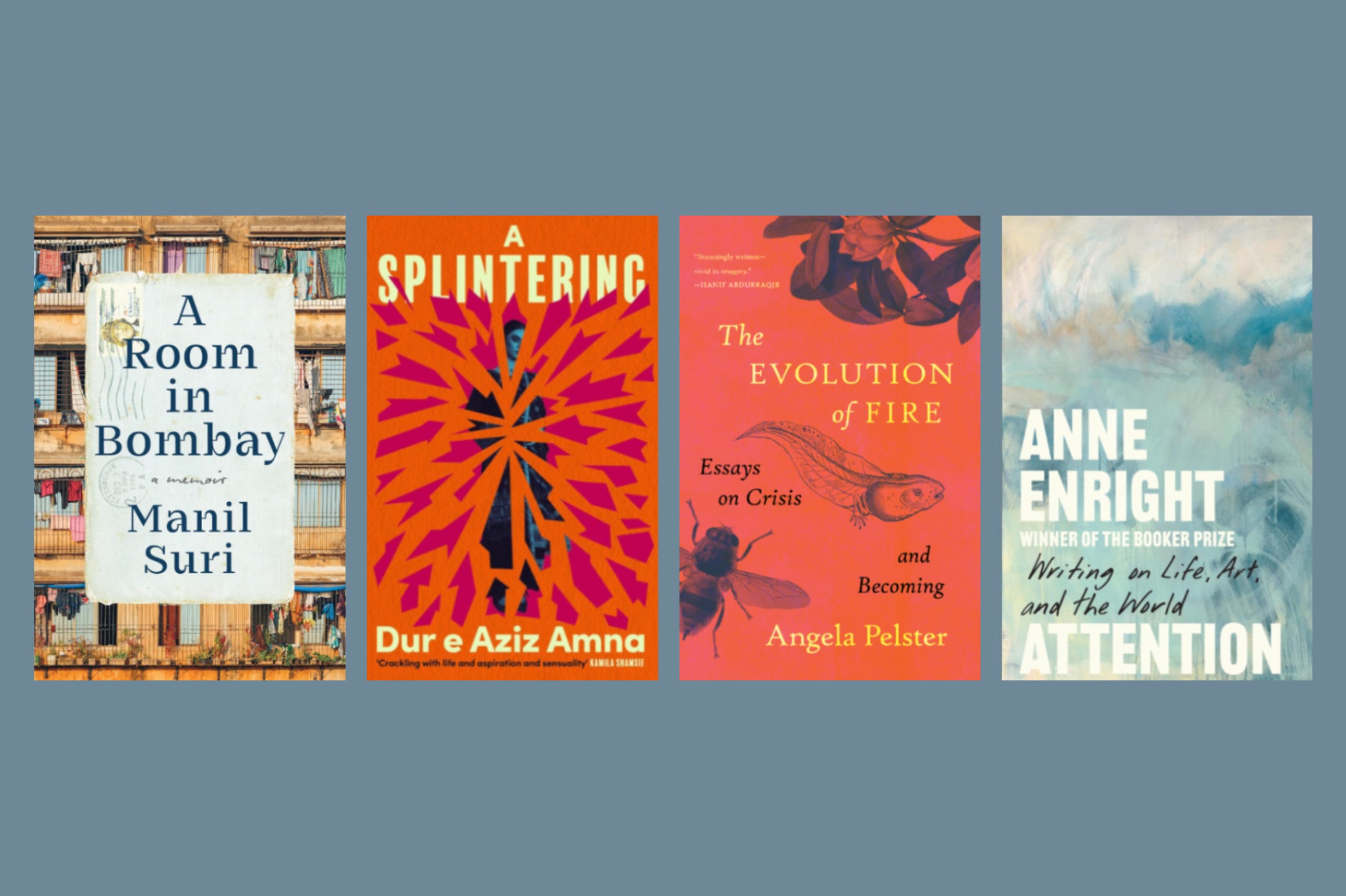
In this issue:
A ROOM IN BOMBAY, by Manil Suri
A SPLINTERING, by Dur e Aziz Amna
THE EVOLUTION OF FIRE: Essays on Crisis and Becoming, by Angela Pelster
ATTENTION: Writing on Life, Art, and the World, by Anne Enright
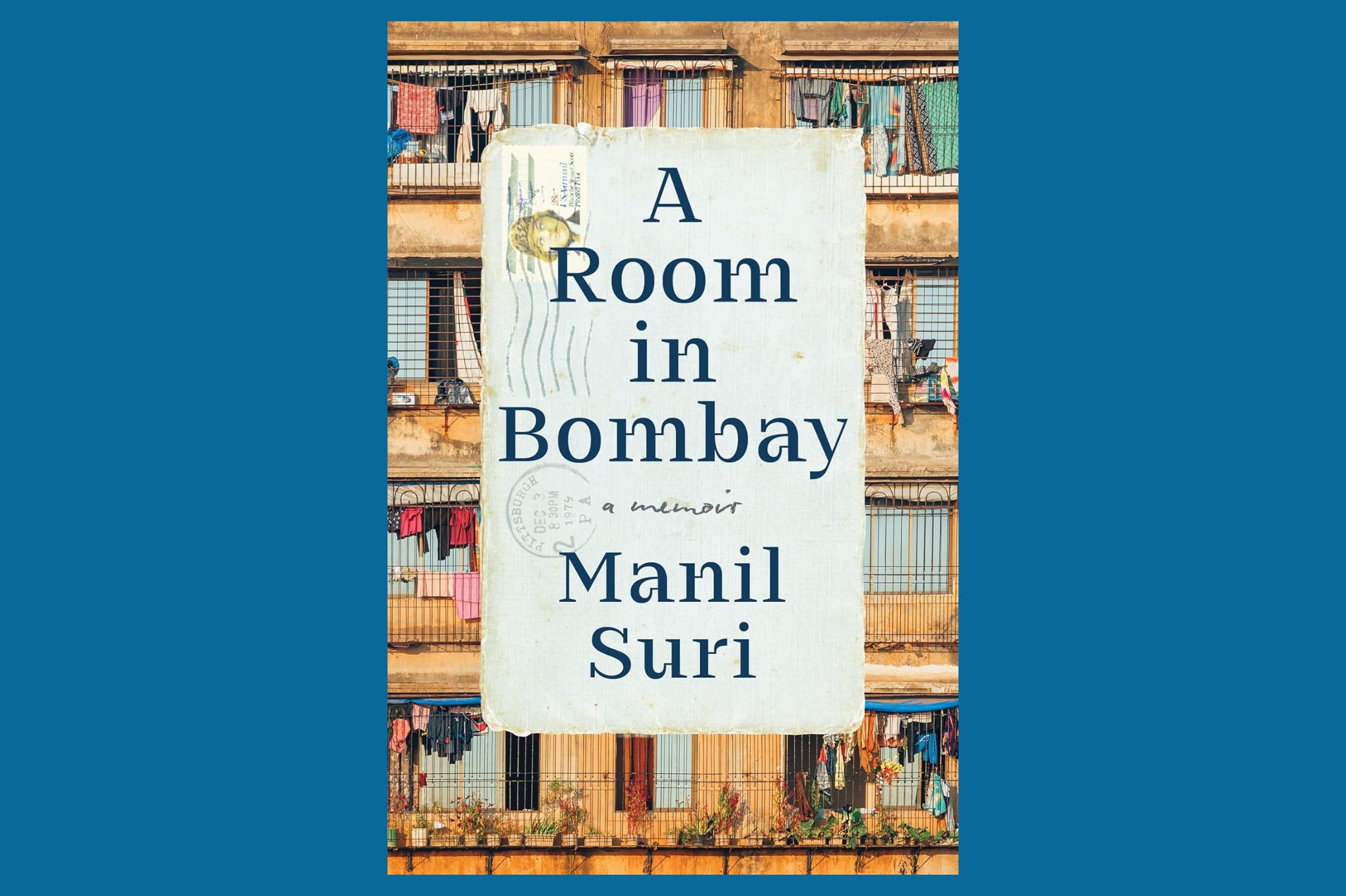
A ROOM IN BOMBAY: A Memoir, by Manil Suri
W. W. Norton & Co.; 304 pages; $29.99 US Hardback
“One can never come back home, but one can also never truly get away,” novelist Manil Suri writes in his evocative new memoir. His parents are bound to the titular room in a Bombay apartment by real-estate pressure and the fallacy of sunk costs. Suri’s father, a Bollywood music director, and his mother, once a secretary to Indira Gandhi, share this single room with their son from the day he is born until he leaves to attend graduate school in the United States. Although his mother’s family lived in a stately mansion in Rawalpindi prior to Partition, by the time Suri is born, they are “teetering on the line between middle class and poor.”
In a dynamic that will be familiar to fans of Suri’s award-winning debut novel, The Death of Vishnu, the Hindu Suris battle constantly for bathroom and kitchen privileges with their Muslim landlords, the Jaffers, as well as with the other tenants. Still, Suri has pleasant memories too, like the trance-like Sufi Qawwali music sessions held in the main room of the apartment, and playing with the Jaffers’ son during the Hindu festival of Holi, when the two boys would gleefully splatter each other with colored powder.
In Suri’s fiction, he deploys an omniscient narrative voice with finesse; here our narrator cannot presume to know the minds of others, and must maintain a respectful distance. Conflicting points of view must be jettisoned, but Suri writes with the same confidence that characterizes his novels. What results is a book largely about the relationship between parent and child, and the lifelong pull of one’s childhood home, as well as its limitations.
Early sections of the book function as a coming-of-age story set in the tumult of urban, twentieth-century India. Pivotally, Suri comes to understand that being gay is part of his core identity. Thanks to the early reassurances (however mistaken) of his Freud-reading mother that it was just a passing phase, he avoids the “taint of abnormality” that might otherwise have hung over him. Thus Freud manages to “perform therapy from beyond the grave,” Suri writes. Later chapters see Suri as a grown man and expat, torn between faraway parents and his new life abroad. Despite living comfortably in America as a mathematics professor, and eventually as a celebrated novelist, he is called back again and again to that room in Bombay, to care for his parents as they age.
Fluid and compelling, this heartfelt narrative—cleverly tied to the humble room at the center of his life, which takes on mythic proportions—is ultimately about the ways we fail the people we love, the imperfect narratives that real life has to offer, and how to reconcile with this reality. Suri pulls off a magic trick here: even though we know where this must all be going, we still can’t help turning the pages to see what happens next.
—Summer Brennan
Also by Manil Suri: The Big Bang of Numbers, The City of Devi, The Age of Shiva, and The Death of Vishnu.
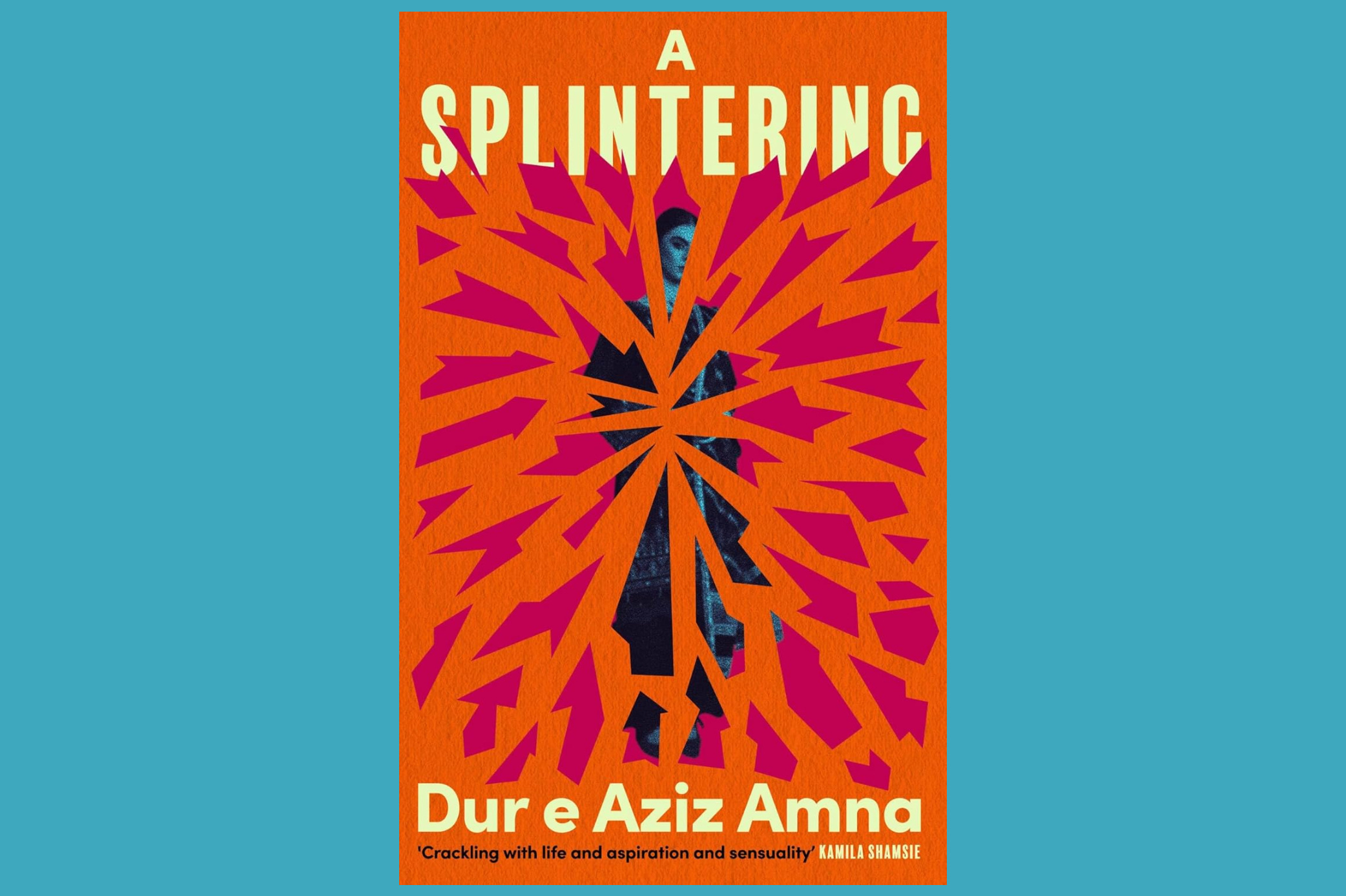
A SPLINTERING, by Dur e Aziz Amna
Dzanc; 232 pages; $17.95 US Paperback
Tara, our narrator, starts with a confession: “I am what some call an unrelatable character, and I have done something unthinkable.” Her life is rife with problems: a devastatingly poor family in rural Pakistan, domineering male relatives, tumultuous national politics, and a simmering sense of rage. When her older brother declares her school to be a “den of whores” and forbids his sisters from going, Tara refuses to quit, sparking lifelong friction.
Despite her brother’s disapproval, Tara manages to get married and move to Islamabad, where her initial elation soon gives way to malaise. She still wants more, even though there is “no socially sanctioned way” to achieve it. When a chance opportunity shows how she might get rich, things change—radically. This turning point may be what makes her “unrelatable,” but it is also where the narrative picks up speed. Set against the backdrop of Benazir Bhutto’s 2007 assassination, the inevitable results of her actions follow like so many dominos falling, not so unthinkable after all.
In this well-written and fast-paced sophomore effort, we are carried along by Tara’s relentlessness much as the people of Pakistan are swept along and buffeted by political strife. When Benazir Bhutto is killed, Tara thinks it wasn’t hard “to erase a woman who had taken such risks,” and we wonder if Bhutto’s fate will be Tara’s own. As both national and family politics descend into chaos, Tara is confronted by the consequences of her choices.
The curse—and blessing—of female rage lies in its transformative power, which is not always controlled by the one who wields it. More family drama than political thriller, A Splintering nonetheless portrays a woman with unabashed ambition who decides to act on it, something which is, in fact, more often than not, a political act.
—Deborah L. Williams
Originally published by Duckworth in the UK; winner of the 2026 Edward Stanford Travel Writing Award.
Also by Dur e Aziz Amna: American Fever.
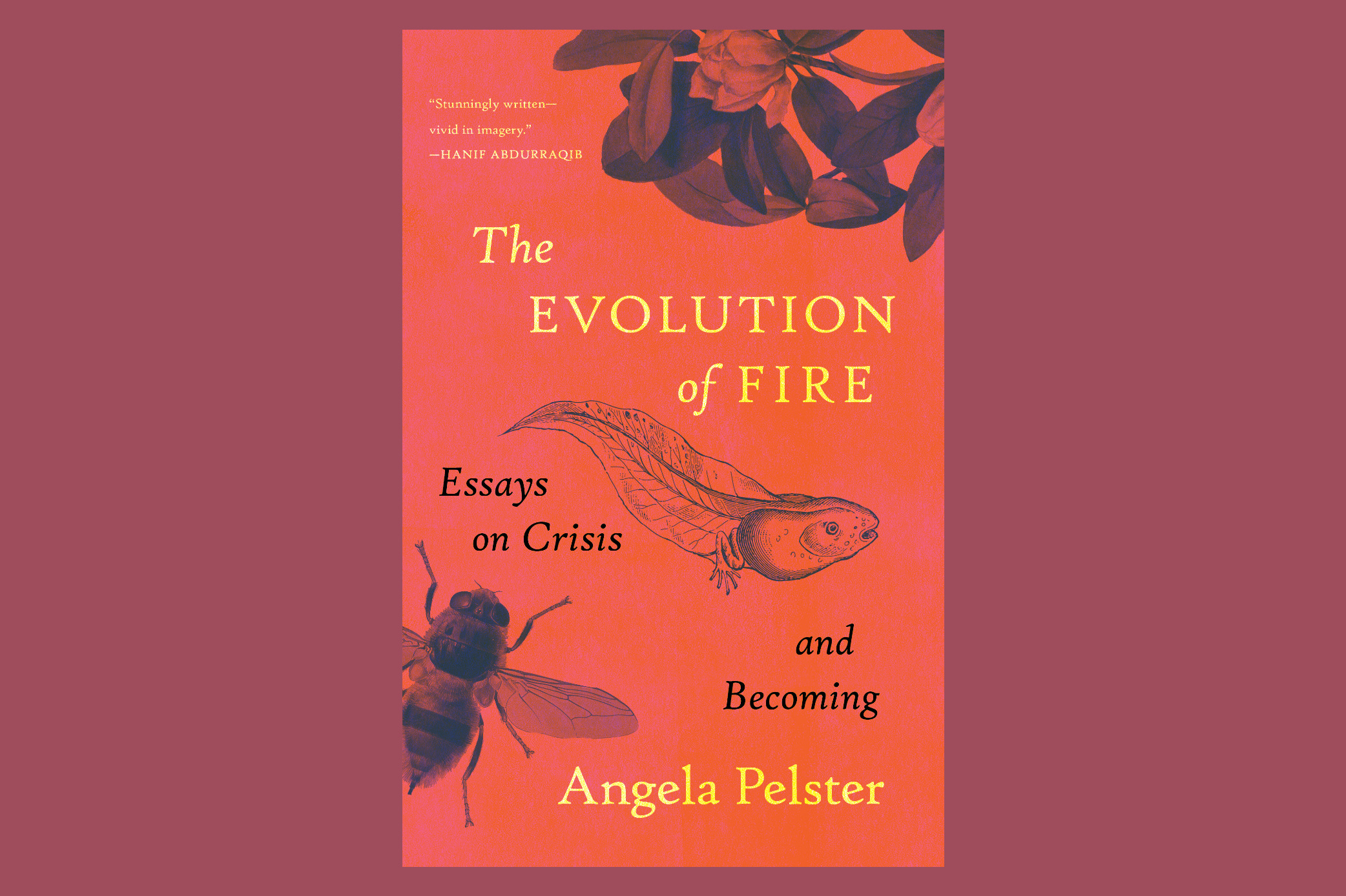
THE EVOLUTION OF FIRE: Essays on Crisis and Becoming, by Angela Pelster
Milkweed Editions; 184 pages; $20.00 US Paperback
Angela Pelster opens her searing new collection with an epigraph from Bertolt Brecht: “To those who do not know the world is on fire, I have nothing to say.” But fear not—this is no preachy polemic. We begin in the rural Alberta of Pelster’s childhood, with its dual pitfalls of drugs and religion. Her family likes to break into houses under construction on Sundays, pretending they are going to live there. They attend a church that may or may not believe in evolution, but the world they inhabit has the same rules: adapt, or go extinct.
The core metaphor in these engaging, memoiristic essays is fire. Fodder for the pyre: a marriage, a religion, a family, the stories we tell and believe about ourselves and others. There is fire as trial and fire as disaster, fire as human nature and fire as the things we can’t control. The central essay deals with the end of a relationship, a creative awakening, and a literal house fire. We barely notice her sleight of hand when “I” becomes “she.”
“A body doesn’t make a conscious decision to evolve,” Pelster writes. “She knows. It’s the crisis the body finds itself in that forces the change.”
Pelster’s imagery is haunting: we see a home with everything in its place, everything quiet, sweet- pea seeds soaking on the counter in the moonlight—just before a spreading conflagration burns it all to the ground. Even the aquatic somehow invokes the metaphor of burning. Of froglets caught as tadpoles by the small hands of children, poured back into ponds once they are grown, Pelster writes: “They grabbed for one another as they fell, arms outstretched, like sisters in the dark, like fire reaches for fire, the warmth of another flame.”
What starts with the personal and immediate eventually tunnels down and out to address all of existence. There is a meditation on diaries and the political nature of archives, how they shape the story of the past not just by what is included, but by what someone has chosen to omit.
Certain later essays can feel caught up in the net of their own poetry, and might have benefited from further untangling; occasionally, flights of incantatory syntax might cause some readers to stumble. Even so, any hindrance is minimal. Pelster never strays too far from the personal and the specific, which is where her flickering prose shines brightest.
—Summer Brennan
Also by Angela Pelster: Limber and The Curious Adventures of India Sophia.
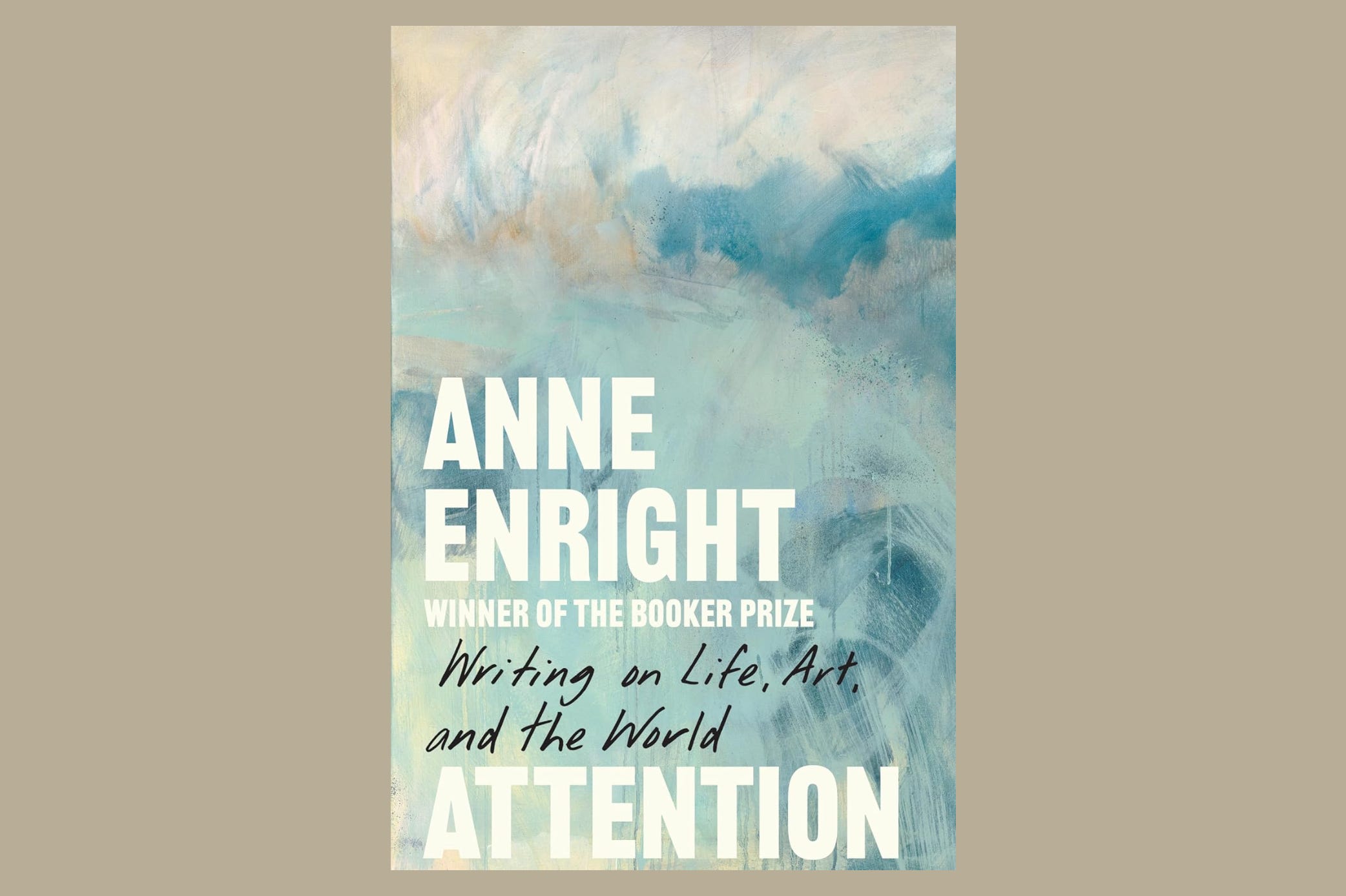
ATTENTION: Writing on Life, Art, and the World, by Anne Enright
W. W. Norton & Co.; 288 pages; $29.99 US Hardcover
In Anne Enright’s searching new collection of essays about reading and writing, she takes on the world of literature, with women and the injustices they are subjected to her persistent theme. Adapted from various talks and articles, with introductions by the author for context, Enright jousts with Joyce and provides a survey of women writers from Toni Morrison to Edna O’Brien, all served with her signature humor and wit: “Maeve Brennan didn’t have to be a woman for her work to be forgotten, though it surely helped.”
Readers do not have to be familiar with the authors Enright writes about in order to enjoy her essays, although they might be left with the urge to run out and read them. She grapples with the tragedy of Ireland’s Mother and Baby homes, and the ambiguities of the MeToo movement—where was the line between predators and run-of-the-mill philanderers and scoundrels, and who was to decide? Many of the essays are funny—“Indeed, a long marriage is, in itself, a lot like Beckett”—while several hint at a contemporary crisis of sexuality, but as practice, not identity. Here, as elsewhere, Enright’s sense of humor is a delight: “I don’t know if tomorrow sex will be good again, but I do know that yesterday it was fantastic.”
The book is a persuasive argument for reading, and for paying attention when you do: “Fiction is, or should be, ‘transporting’: this immersive state is not something you can enter and exit every two minutes to check dog videos and the progress of the war in Ukraine.” Thought-provoking and gloriously intelligent, Attention is that rare literary work that is equally erudite and fluent. Though its pleasures are more straightforward, readers who manage to follow Enright’s prescription might have an experience similar to hers on first reading Joyce. “For me, at fourteen, it was like mainlining language, getting high on words, just the pleasure of them, their intricacies and density.”
—Summer Brennan
Originally published by Jonathan Cape in the UK in 2025 .
Also by Anne Enright: The Portable Virgin, The Wig My Father Wore, What Are You Like?, Making Babies, The Pleasure of Eliza Lynch, The Gathering, Taking Pictures, Yesterday’s Weather, The Forgotten Waltz, The Green Road, Actress, and The Wren, the Wren.
Masthead
Editor: Summer Brennan
Copy Editor: Howard Mittelmark
Guest reviewer: Deborah L Williams, author of The Necessity of Young Adult Fiction, has written for The New York Times, The Rumpus, Brevity, Lit Hub, and elsewhere.

The Book Supplement is free but paid subscriptions make it possible. Become a paid subscriber today, or sign up as a Founding Member to defend literature from the forces of tyranny. If you enjoyed reading this issue, please consider sharing it with a friend.
It worked out that I wrote *three* of this week's book reviews! Last week I didn't write any. I loved reading these books, and highly, highly recommend all of them.
I LOVE THESE BOOK SUPPLEMENTS!!!!!!!!!!!!!!!!!!!!