The Book Supplement, Vol. 5
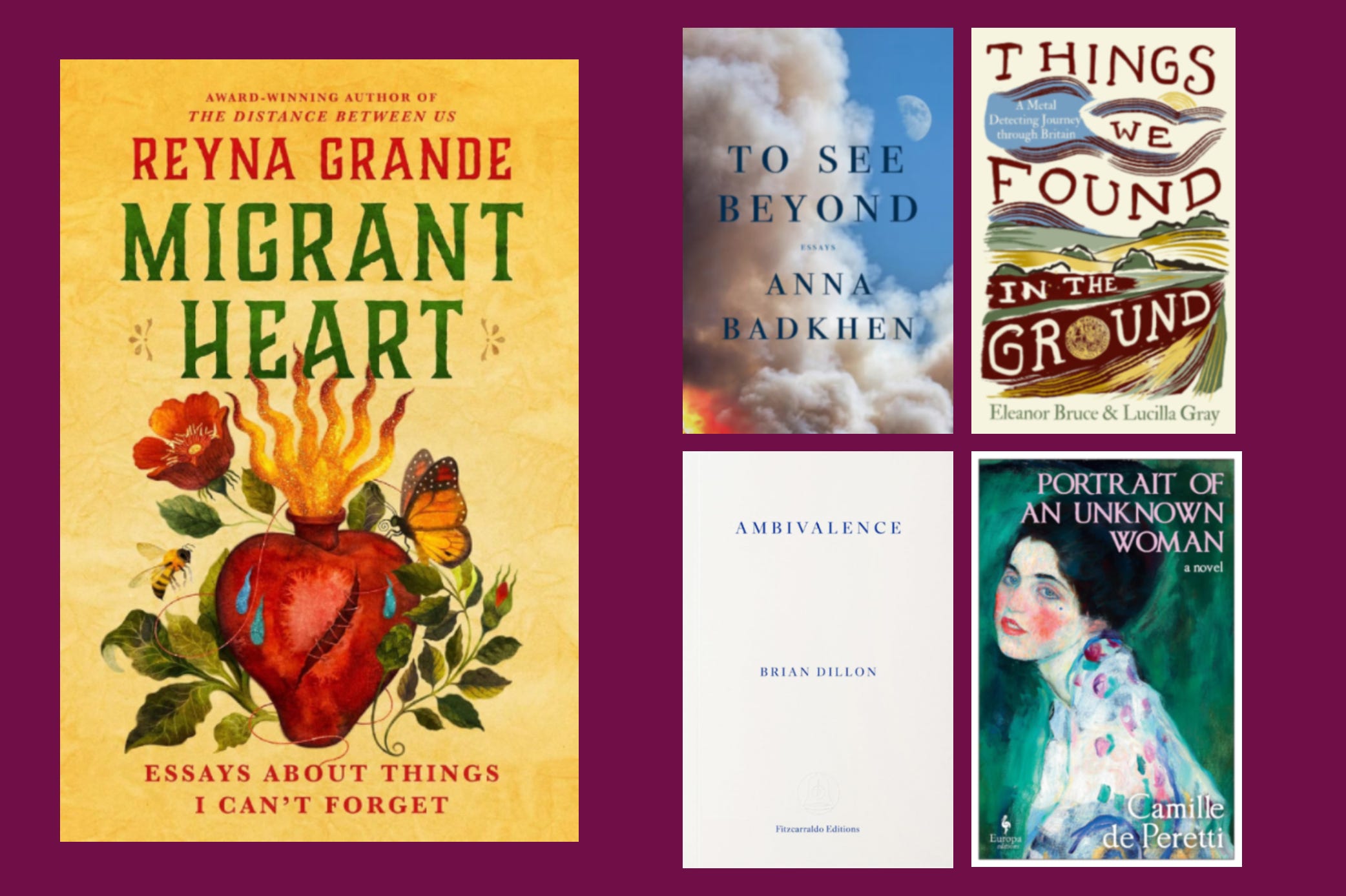
Reyna Grande, Anna Badkhen, Eleanor Bruce, Lucilla Gray, Brian Dillon, and Camille de Peretti.
Hello and welcome to the fifth edition of The Book Supplement. Thank you for being here.
When I first launched this column back in early March, I did so without first securing funding to pay contributors, and without even knowing where said funding would come from week to week—other than my own grocery bill! Two months and five editions later, I still don’t. But as Dwight Garner recently wrote in the New York Times: “Even before the rise of A.I. there was a near-extinction-level wipeout of the American book review. It has gotten eerily quiet out there—it’s as if the bees, those kibitzing and sometimes stinging pollinators, have vanished—and few have noticed.”
I may be doing this books thing imperfectly, but still I feel it’s necessary. This is only happening because freelance critics (and one very generous contributing editor) are willing to work for peanuts or, in some cases, nothing at all. And yet we beat on, boats against the current; we can’t go on, we’ll go on, etc.
This week you’ll find one full review—a rave of Migrant Heart by Reyna Grande—followed by several recommendations of other new and forthcoming titles of note. I thought you’d want to know about them, even though a full review was not possible. Brian Dillon’s 2018 book Essayism should be considered a classic, and I’ll recommend anything new he puts out. Eleanor Bruce and Lucilla Gray of Roman Found are a delight, as is their Substack, YouTube channel, and now debut book. The National Book Award–longlisted author Anna Badkhen’s new collection (and eighth book) has been called “stunningly beautiful” by The Boston Globe, and should be on the radar of any essay lover. And of course a new English translation of Camille de Peretti’s novel Portrait of an Unknown Woman, about the secret identity of the model in a famous painting, sounds like it was written just for me.
If you appreciate this coverage, want to help us save the intellectual pollinators that are book reviews, and prevent the stillbirth of wonderful new titles like these, please consider becoming a paid subscriber today. If you have already done so, thank you. Every little bit helps.
— Summer Brennan
In this issue:
MIGRANT HEART: Essays About Things I Can’t Forget, by Reyna Grande
Books In Brief:
TO SEE BEYOND: Essays, by Anna Badkhen
THINGS WE FOUND IN THE GROUND: A Metal Detecting Journey Through Britain, by Eleanor Bruce and Lucilla Gray
PORTRAIT OF AN UNKNOWN WOMAN, by Camille de Peretti
MIGRANT HEART: Essays About Things I Can’t Forget, by Reyna Grande
Atria; 256 pages; $29.00 US Hardcover
In Migrant Heart, author Reyna Grande’s daughter Eva tends to a monarch butterfly named Buttercup. With lopsided, stunted wings, it will likely never fly; its chances are slim, yet Grande hopes her daughter’s love for this creature will be a kind of healing magic. A Mexican migrant like the monarchs that travel annually to Mexico and back, she too has confronted both pain and insurmountable obstacles. “The reality is, sometimes our wings fail to carry us across the vast distances we yearn to go,” she writes.
In eighteen essays that chronicle experiences of abuse, sexual violence, racism, disease, and aging, Grande also grapples with the labor of writing, the complexities of interracial marriage, learning English, and forgetting parts of her mother tongue. Like those migrating butterflies, she too must exist in two worlds, caught between her impoverished Mexican parents and her thoroughly American, middle-class children. She reflects on the vulnerabilities and conflicts of being a writer who, because of the politics of our time, must stand as a representative for all those marked “woman,” “immigrant,” and “brown.”
In one essay, she confronts the possibility of blindness due to botched LASIK surgery. Her only hope is a cornea transplant, which would require the death of another human being, as well as lifelong medical intervention to keep her body from rejecting the foreign tissue. This becomes a powerful allegory for the migrant experience: “The trauma of dislocation, coping with displacement and instability, intensifies as a new language is grafted onto your tongue, a new identity is transplanted onto your being, a new worldview is embedded in your mind,” she writes. “There comes a time when you look in the mirror with new eyes and no longer recognize yourself. You’ve become a chimera, the DNA of two languages, two cultures, two countries now at war inside you.”
The most complex relationship she explores here is with her father, whom she both loved and feared. He physically carried her across the desert to reach the United States when she was a child, but he also beat her and her siblings. Nevertheless, she writes of him with empathy and forgiveness, knowing that he was himself gravely abused by his father. “Tu papa que no te olvida,” he had signed his letters when away from this family: Your father who does not forget you. “Tu hija que no te olvida,” she writes to him in turn: Your daughter who does not forget you.
This moving and unsparing memoir in essays poignantly renders the pain of migration, while insisting—however cautiously—on the possibility of hope. Though many of these stories are laced with misery, the author’s virtuosic prose carries the reader over an anguished landscape like the butterfly rescued by her daughter. Despite Grande’s fears, Buttercup “flew across the garden and over the neighbor’s fence, then soared into the vast blue sky.”
— Michael L. Trujillo
Also by Reyna Grande: A Ballad of Love and Glory, Across a Hundred Mountains, Dancing with Butterflies, The Distance Between Us, A Dream Called Home, Somewhere We Are Human: Authentic Voices on Migration, Survival, and New Beginnings.
Books In Brief
Fitzcarraldo Editions; 172 pages; £12.99 UK Paperback
Also forthcoming from New York Review Books in September 2026.
“When Brian Dillon was sixteen his mother died and he simply gave up all schoolwork. While he courted exam failure, his real education was going on elsewhere: with books, music, films and television. When at last he made it to university, his head was already full of avant-garde writing, art and ideas. […] In vivid present-tense fragments, Dillon describes his first encounters with writers such as Virginia Woolf, Walter Benjamin, Samuel Beckett, Roland Barthes and Jacques Derrida. He recalls being seduced by ambivalence, ambiguity and androgyny—on the page and in the life he hoped his reading would transfigure. […] Today, when rights are fragile, arts and humanities attacked, and students dismissed as radicals or narcissists, Ambivalence is an argument for the poetic and revolutionary force of changing yourself and even the world by changing what you know.”
— Fitzcarraldo Editions
HarperNorth; 320 pages; £20.00 UK Paperback
Also forthcoming from Sourcebooks in September 2026.
For lovers of history, gentle hobbies, and the BBC cult hit “Detectorists.”
“Beginning with their first meeting in over 20 years at their grandfather’s home in Lincolnshire, the two cousins—Eleanor and Lucilla—quickly learn that each has a fascination with unearthing historic artifacts, which will set them off on their metal detecting journey […] Over many weeks and months spent digging countless holes, the pair make startling discoveries […] as they forge connections with local villagers, detectorists, and history lovers along the way. This charming tale of self-discovery will capture the hearts and minds of those seeking escapism through the buried history that we walk over every day.
—HarperNorth
PORTRAIT OF AN UNKNOWN WOMAN, by Camille de Peretti, translated from the French by Hildegarde Serle
Europa Editions: 288 pages; $19.00 US Paperback
“A saga inspired by the incredible but true story of the iconic Klimt painting […] Painted in Vienna in 1910, Gustav Klimt’s “Portrait of a Lady” was purchased by an anonymous collector in 1916, retouched by the master a year later, then stolen in 1997 before reappearing in the gardens of an Italian modern art museum in 2019. No art experts, museum curators, or police investigators know the identity of the young woman in the painting, nor the mysteries that surround the turbulent history of her portrait. From the streets of Vienna in 1900 to Texas in the 1980s, and from Manhattan during the Great Depression to contemporary Italy, de Peretti imagines the destiny of this young woman as well as that of her descendants, and creates a masterful fresco that intertwines family secrets, disappearances, and thwarted loves.”
— Europa Editions
TO SEE BEYOND: Essays, by Anna Badkhen
Bellevue Literary Press; 192 pages; $17.99 US Paperback
“Our hyper-informed digital era of climate catastrophe, historically unmatched migration, and genocide confronts us with a terrible conundrum: the pain and struggles of others are more visible than ever, yet hostility and loneliness persist. It often seems that we are on the edge of ruin, and hope, though necessary, is elusive. How can we reconcile ourselves to the world we have made? In To See Beyond, Anna Badkhen probes the ways we ward off despair as she imagines the language we need for survival. Through engagement with contemporary literature and stories of everyday encounters with people around the world, she brings us closer to understanding how we balance delight and grief, joy and hurt, and choose to embrace life as a form of resistance.”
— Bellevue Literary Press
Masthead
Editor: Summer Brennan
Contributing Editor: Howard Mittelmark
Guest reviewer: Michael L. Trujillo, author of Land of Disenchantment, is the Associate Chair of Chicana/o Studies at the University of New Mexico.
The Book Supplement is free but paid subscriptions make it possible. Become a paid subscriber today or sign up as a Founding Member to defend literature from the forces of tyranny. If you enjoyed reading this issue, please consider sharing it with a friend.


Thank you for putting together this supplement. I really enjoy it and appreciate the work it requires. Looking forward to reading all these books.
Thank you for putting the gether t