

Hello and welcome to the first issue of The Book Supplement. As I wrote last month, books are a vital institution, necessary for both the health of a democracy and the well-being of the individual. In these strange times, both in America and abroad, the systems that once helped readers discover new books are collapsing. The book review sections of newspapers are almost extinct. Books need defending, and we want to do our part.
Below you’ll find a few recent and forthcoming titles of note. All opinions expressed in the review are the opinions of the reviewer. If you appreciate this coverage and wish to see more, please consider becoming a paid subscriber today. Even a few dollars a month will help keep this going.
In this issue:
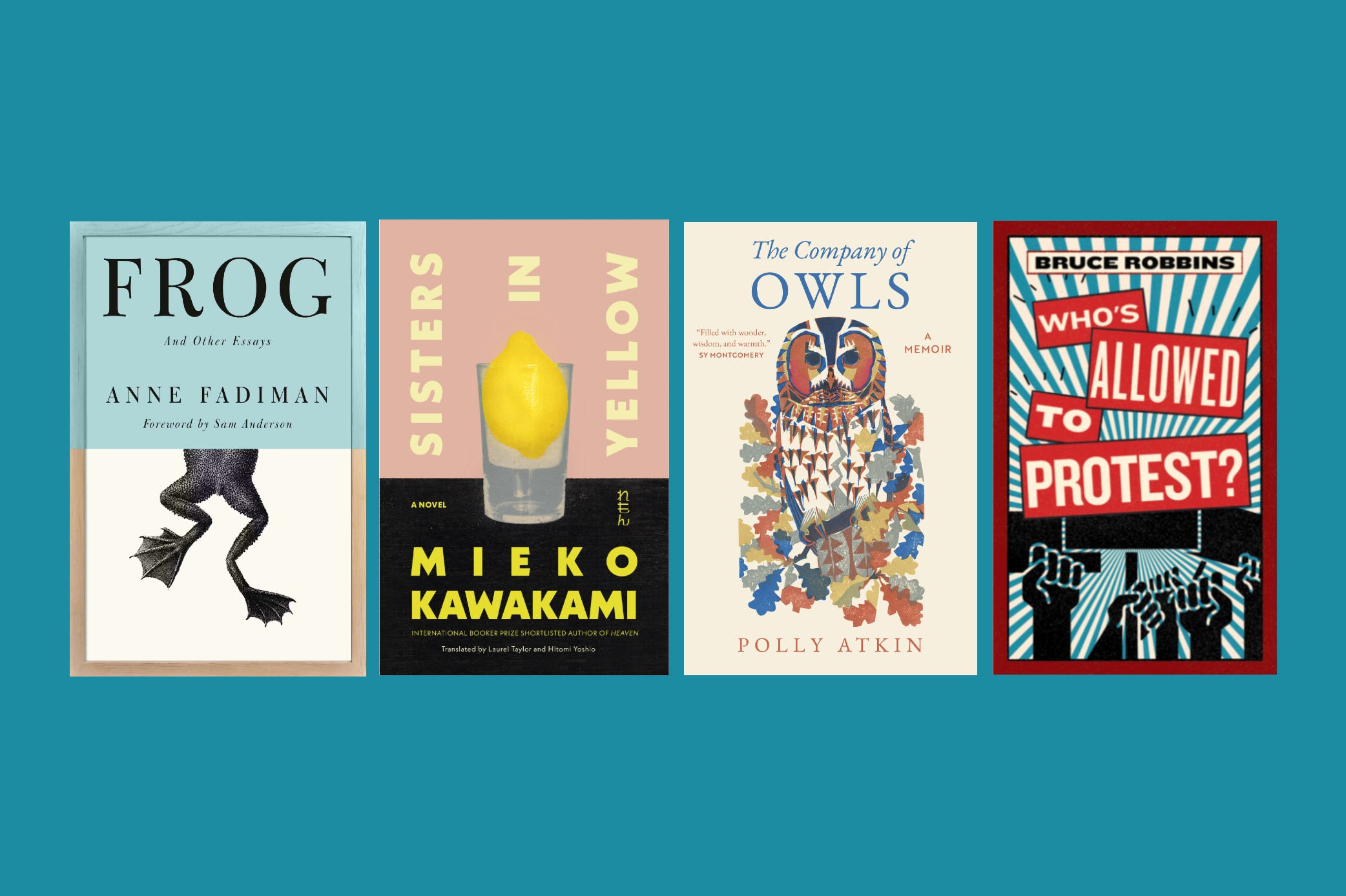
FROG And Other Essays, by Anne Fadiman
SISTERS IN YELLOW, by Mieko Kawakami
THE COMPANY OF OWLS, by Polly Atkin
WHO’S ALLOWED TO PROTEST? by Bruce Robbins
All titles can be found on Bookshop.org .
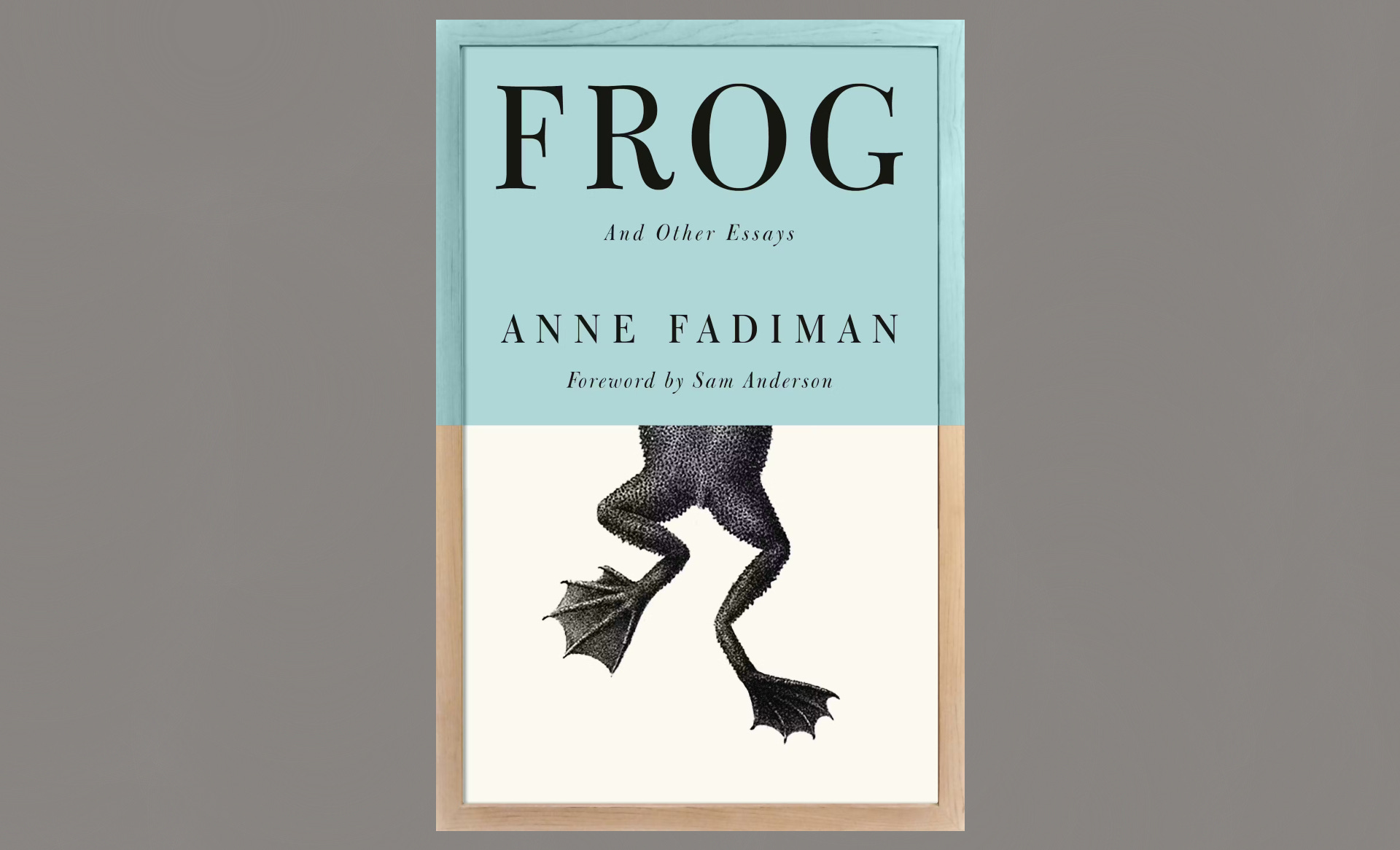
FROG And Other Essays, by Anne Fadiman; forward by Sam Anderson
Farrar, Straus, and Giroux; 170 pages; $26.00 US Hardcover; $13.99 eBook
“On our first night in Massachusetts, after we turned off the lights, I dreamily called George’s attention to the sound of peepers wafting through our window from the riverbank,” Fadiman writes in the title essay of this poignant and gently humorous collection. “He informed me that we were listening to Bunky, in Henry’s room, over the baby monitor.”
Bunky, the family’s “Grow-a-Frog” (an African clawed frog shipped as a tadpole from Florida to New York City in a Styrofoam container), is Fadiman’s unlikely protagonist, both overlooked and unforgettable.
“For years—ever since Bunky’s aquarium had migrated from Henry’s room to the kitchen counter—I’d been going downstairs for a snack at 2 a.m., and there he’d been, softly calling for a mate he would never meet,” Fadiman writes.
Ghostly, strangely balletic, and involuntarily celibate, the anthropomorphized Bunky—part of a child’s mail-order, educational biology kit—is a whim of a pet who ends up living for sixteen years, or maybe seventeen, no one is certain. It is a tale of good intentions and accidental neglect, belated fascination and stubborn, unexpected love.
“I realize that a psychiatrist might say this essay is an attempt to atone for my lack of interest in Bunky when he was alive,” she muses. “A lot of good that does him now.”
Deftly employing a wry grandiloquence, Fadiman, a master essayist, tackles unexpected objects of affection: a frog, a famous poet’s wayward son, a 1980s printer, the twentieth-century evolution of personal pronouns, a pandemic Zoom class, an unlikely Antarctic periodical, and a tribute to a promising former student.
Together, the essays tell the stories of underdogs with a vaguely amphibian feel to them. They are creatures that inhabit dual realms, misunderstood or obsolete, things that live in the shadow of other things, not belonging solely to one place or another. They share themes of responsibility and dependence, guilt and avoidance, parenthood and paralysis.
At one point, reading this volume very early in the morning, I found myself saying aloud, “Good book…niiice book,” as though it were an animal that had curled up beside me. Is there any higher praise? Bunky and his fellow essay subjects will not easily be forgotten.
— Summer Brennan
Other titles by Anne Fadiman: The Spirit Catches You and You Fall Down (winner of the National Book Critics Circle Award for Nonfiction), Ex Libris, At Large and At Small, The Wine Lover’s Daughter, Rereadings (editor) and The Best American Essays 2003 (editor).

SISTERS IN YELLOW, by Mieko Kawakami; translated from the Japanese by Laurel Taylor and Hitomi Yoshio
Knopf; 448 pages; $30.00 US Hardcover
Hana Ito, a fifteen-year-old girl living in a suburb of Tokyo with her increasingly neglectful mother, knows what it means to be poor. She forgoes her studies and any attempt at friendship to focus solely on working and adding money to the savings account she keeps in a secret shoe box—the one glimmer of hope she feels for the future. Her fixation only intensifies after these savings are stolen, and she leaves her mother’s home to live with Kimiko, a mysterious woman twenty years her senior.
Like the films of the French New Wave, Mieko Kawakami’s Sisters in Yellow, which won Japan’s prestigious Yomiuri Prize for Literature, cleverly employs the aesthetics of a classic noir crime story to explore issues of class, wealth disparity, structural misogyny, and the yearning for a sense of safety and belonging felt by those on the outside.
Hana surrounds herself with anything yellow. It is the color of prosperity and abundance, according to feng shui, and for a time her yellow shrine seems to work. The two women begin running a successful bar called Lemon (so named by Hana because, well, yellow), and soon her new savings account requires a much bigger box. For the first time in her life, Hana feels content and safe—but safety is only ever an illusion. She will soon face dark betrayals and even greater secrets.
“Money is power, and poverty is violence,” Hana is told by a character helping her tiptoe into the world of crime. “People with money make the rules to help themselves, and poor people get sucked dry. And when you’re all dried up, when you’re nothing but dregs, they make you think it was your fault that you failed at life. They make it sound like you had a chance. Well, fuck that.”
Kawakami has once again created a compelling first-person narrative, with all of her usual pop-cultural references and philosophical musings on ample display. Appearing for the first time in English, the translation by Laurel Taylor and Hitomi Yoshio (having taken over from Sam Bett and David Boyd) perfectly captures the author’s casual profundity with simple, clear sentences, and occasional shocks of beauty that sneak up and make the reader pause for a moment in wonder.
A rising star in the literary world since her breakthrough novel Breasts and Eggs (Europa Editions, 2020), Kawakami has won fans for her deep characters, her exploration of feminism, and the existential questions posed in each of her novels. This time, she has not only created a stunning work of literary merit, but an electrifying page-turner about inequality and ambition, with a lingering sense of rage.
— Bobby Keniston
Other titles by Mieko Kawakami in English: Ms Ice Sandwich, Breasts and Eggs, Heaven, All the Lovers in the Night, and Ashes of Spring.
In Japanese: わたくし率 イン 歯ー、または世界, 乳と卵, 先端で、さすわ さされるわ そらええわ, ヘヴン, すべて真夜中の恋人たち, 愛の夢とか, あこがれ, ウィステリアと三人の女たち, 夏物語, 春のこわいもの, 黄色い家.
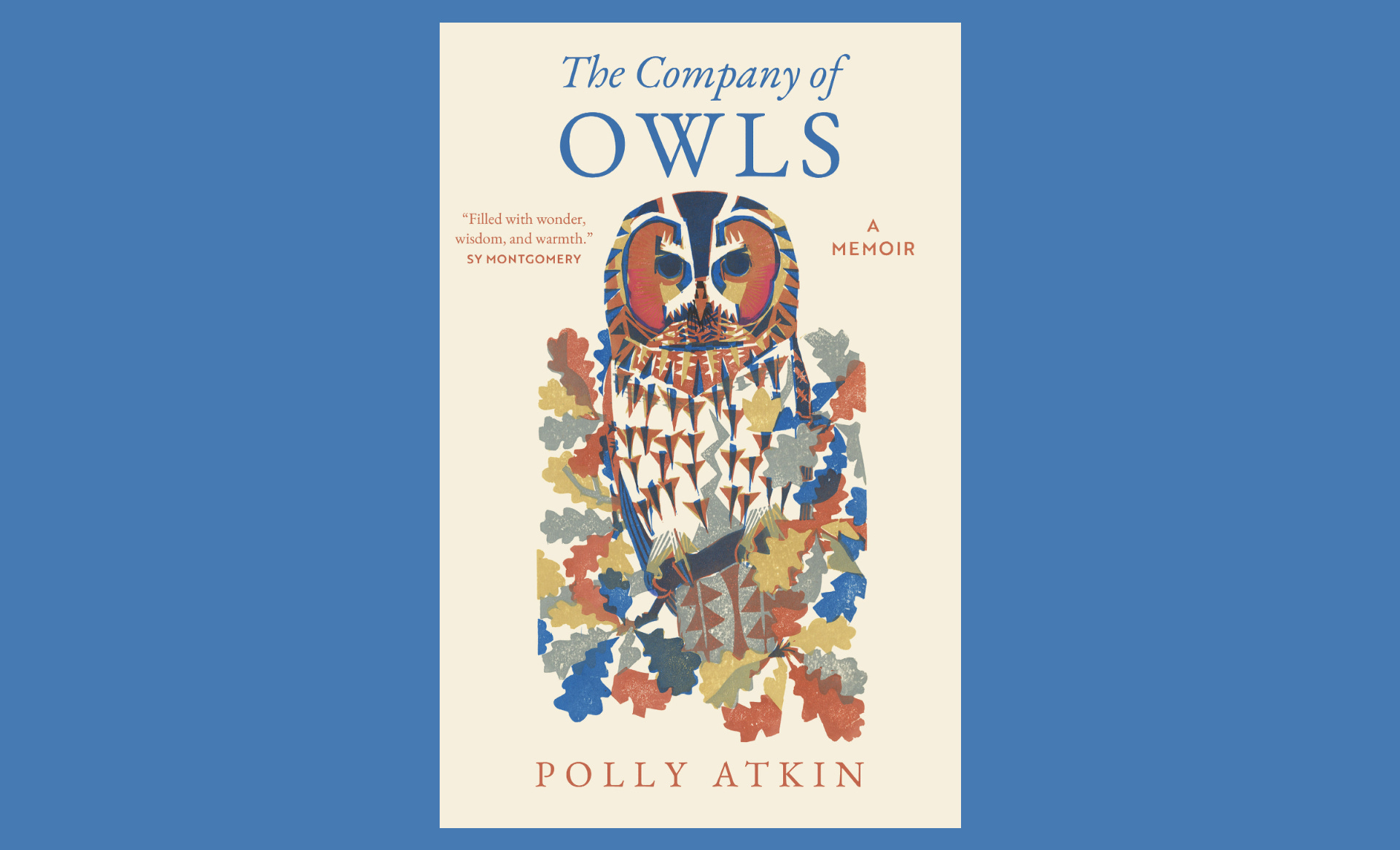
THE COMPANY OF OWLS, by Polly Atkin
Milkweed Editions; 216 pages; $25.00 US Hardcover; $11.99 US eBook
English author Polly Atkin is forthright about her expertise in the prologue of The Company of Owls: “I am not a naturalist or an ornithologist. I am no expert in things owls or owlish. I just live next to some.”
Accordingly, her latest book is not a deep-diving, globe-spanning, single-subject tome that encompasses the entire Strigiformes order and its natural history. Rather, her memoir takes the form of a series of short, occasionally micro essays, mostly involving tawny owls (a Eurasian cousin of the familiar, similar-looking North American barred owl) and a few short-eared owls that the author, her partner Will, and their rural community of Grasmere encounter—sometimes serendipitously, but most often with ardent purpose.
Although there are plenty of owl facts to be gleaned within, the operative word in its title, it turns out, is “company”; a recurring theme throughout the book concerns Atkin’s navigation of the Covid era as someone living with chronic illness. The owls (and owlets) she observes and learns about are not only a source of inspiration and fascination, but companionship at an especially fraught and isolating time.
Atkin may not be a field biologist, but she is a keen citizen scientist as well as a poet. She brings an exacting eye for detail both to her birding and to her prose. The essays flow from one to the next intuitively, often calling backward and forward to one another like poems in a finely wrought collection or, well, like owls.
Atkin finds apt metaphors for aspects of her life’s story in the habits, histories, and even physiology of tawny owls, which she mostly studies in and just outside of her walkable village. Casual and seasoned birders alike, as well as lovers of reflective essays on any subject, will find much to savor and identify with in these pages—even those of us who’ve never set foot on a fell or heard the characteristic tu-whit tu-whoo of the tawny.
In one passage, Atkin invokes what has been called the “frequency illusion,” asking “is it an illusion if seeing something once actually enables you to recognize it the next time you see it?” I wondered about this when, after a morning spent reading her book, I drove past a barred owl perched overlooking a farm field as heavy snow swirled around, and felt its company—both the owl’s and the book’s.
— Michael Metivier
Originally published by Elliott & Thompson in the UK; longlisted for the Wainwright Prize for Nature Writing 2025.
Other titles by Polly Atkin: Some of Us Just Fall, Recovering Dorothy, Shadow Dispatches, Basic Nest Architecture, Much With Body, and Emergency Dream .
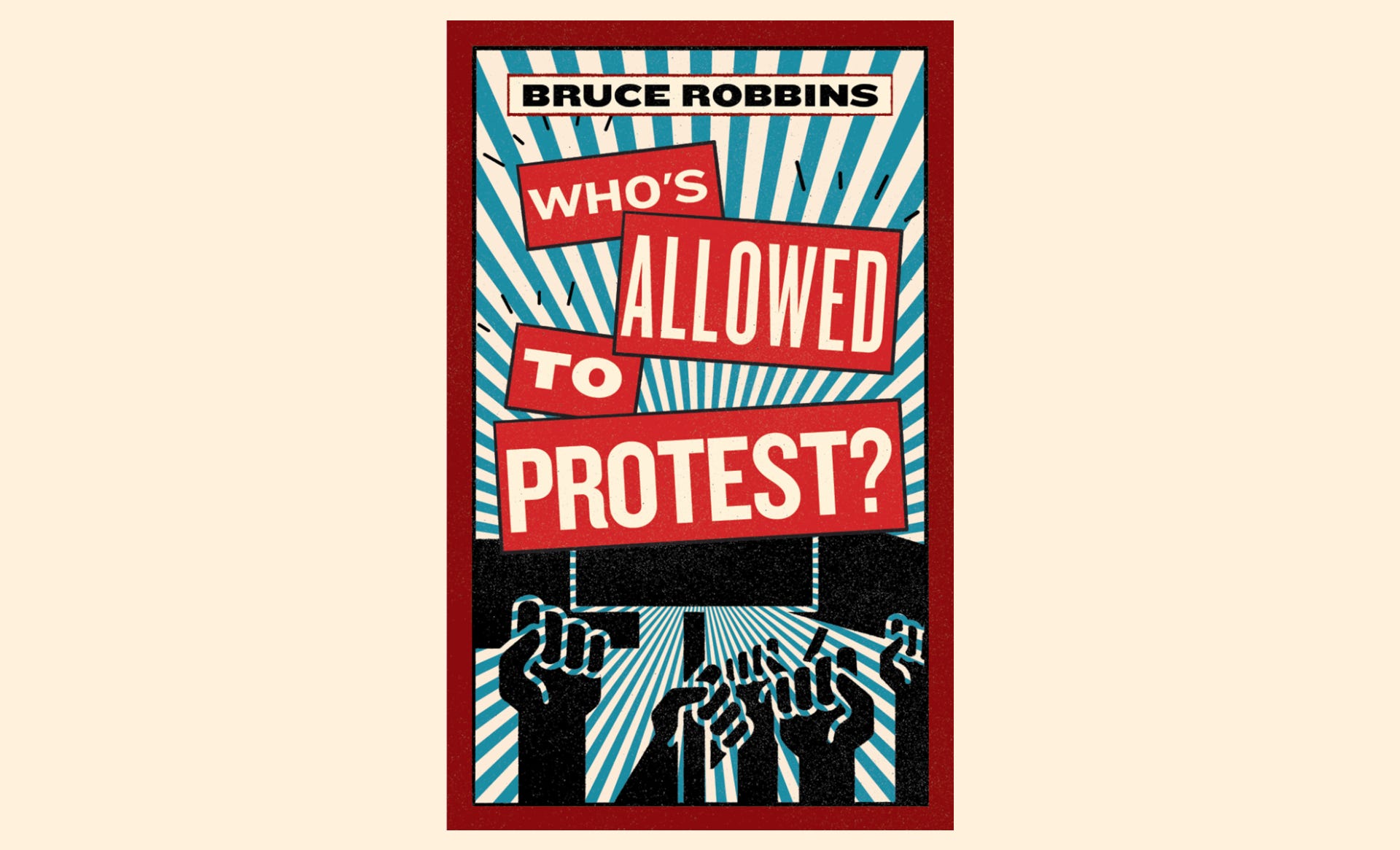
WHO’S ALLOWED TO PROTEST? by Bruce Robbins
Melville House; 160 Pages; $18.99 US Paperback
The titular question in Bruce Robbins’s Who’s Allowed to Protest? is not primarily concerned with members of the Black Civil Rights Movement, the poor of the global South, or the blue-collar workers of the American Labor Movement. Rather, this slim volume opens with the death of nineteenth-century French Romantic writer Gérard de Nerval, who was said to walk his pet lobster in the Jardin du Palais-Royal every day on a leash of blue silk (though this is likely apocryphal). In this perfectly timed intervention, Robbins concerns himself with the rights of the privileged, like nineteenth-century Bohemians in Paris or American academics and their students now, to protest in a society where they themselves live in relative comfort—or, in Nerval’s case, self-inflicted privation.
From the response to student struggles of the twentieth and early twenty-first centuries, including protests at Columbia University against the Israeli occupation of Gaza, to the French sociologist Pierre Bourdieu’s critique of nineteenth-century Parisian artists, anti-elitism has often been misdirected and factually incorrect, serving to “launder” the power of money, Robbins argues. The ruling class is not in fact made up of skilled, educated, credentialed professionals, he tells us in this lively and insightful book; rather, it is made up of the owners of the companies and institutions for whom such professionals work.
Robbins sides with middle-class, economically comfortable critics, called “elites” by the Right to discredit them, in contrast to the moneyed and truly powerful who freeze inequality in place. In conversation with purveyors of American anti-elitism like David Brooks and his precursor William F. Buckley Jr., Robbins considers the implicit rhetoric of sociology, and the political economy of publications, from The National Review to N+1. His support of students opposing militarism is especially timely.
Repeated callbacks to Nerval’s struggles show Robbins’s self-awareness. That eccentric Parisian, who benefited from his parents’ wealth, died by suicide, poverty-stricken, on a winter street in 1855. He is rendered strangely heroic by Robbins’s prose.
Bourdieu’s critique of nineteenth-century Parisian artists—that they competed for social capital if not wealth, and found success in commercial failure that added to their Bohemian prestige—was employed by Brooks in the late twentieth century to prop up a contemporary notion of “anti-elitism” that devalues credentialed expertise and attacks higher education and federal agencies. Brooks argued that students did not really protest for their own explicit motives or on behalf of others, but rather to seek prestige, social capital, and a sense of superiority.
“Why the sociologists feel obliged to look elsewhere for the protestors’ motives is a bit of a puzzle,” Robbins asks, turning the question around to consider the motives of the sociologists and pundits like Brooks themselves. Comforts like a professor’s salary, the largess of middle-class parents, philanthropy from the likes of George Soros, government support in the form of the National Endowment for the Arts and even the subsidized services of the United States Postal Service, bring with them the responsibility to protest the mistreatment of others. That responsibility is itself grounded in privilege, even the privilege of merely being “dispensed, at least temporarily, from the necessity of making a living.” The question then becomes not just who is allowed to protest, but who must?
— Michael L. Trujillo
Other titles by Bruce Robbins: Criticism and Politics, Atrocity, Perpetual War, Upward Mobility and the Common Good, Feeling Global, The Servant′s Hand, The Beneficiary, Secular Vocations, and Cosmopolitanisms (editor), among others.
Masthead
Editor: Summer Brennan
Copy Editor: Howard Mittelmark
Guest Reviewers: Bobby Keniston is a playwright and critic. Michael Metivier is an editor at Merriam-Webster, with poems and essays in Orion, Prairie Schooner, Kenyon Review, and others. Michael L. Trujillo, author of Land of Disenchantment, is the Associate Chair of Chicana/o Studies at the University of New Mexico.

Thank you for reading. The Book Supplement is free but paid subscriptions make it possible. Become a paid subscriber today. Sign up as a Founding Member to defend literature from the forces of tyranny. If you enjoyed reading this issue, please consider sharing it with a friend.
These are all new to me. The Sisters in Yellow cover is STUNNING!
Nothing better than a bird book.